Farewell to a Friend

Yesterday, we found out that a good friend of ours, Bill Bennett, died recently at age 76. I say “good friend” even though I only met him a couple of times. His wife, Mary, taught with Kathleen years ago, in the Chicago suburbs, and those two have kept in touch ever since. About 20 years ago, we spent an engaging weekend with them in their summer home in Wisconsin, and I was immediately charmed by both people. Bill and I hit it off right away, as we both taught history and shared an unrequited love for the Chicago Cubs. They were also an interesting couple who loved conversations on literature, politics, history, and culture. Mary had been a nun before giving up her vows, and they spent many happy years together as a married couple.

One of Bill’s favorite historical figures was Teddy Roosevelt, and Mary included several TR quotes on the prayer card that people received at Bill’s memorial service. The first quote speaks to the situation in the U.S. today: “This country will never be a good place for any of us to live in unless we make it a good place for all of us to live in.” Another one came shortly after Teddy was shot in the chest while giving a campaign speech in Milwaukee in 1912. The bullet stopped just a fraction of an inch from his heart, and he was bleeding profusely from the wound. Being Teddy, however, he insisted on giving the rest of his two-hour-long speech before obtaining medical attention. Asked about it afterward, he said, “I don’t always get shot during the middle of a speech, but when I do, I finish the damn speech.”

Another thing you should know about Bill is that he was one of the last people in this country to contract polio. He got the disease as a child and suffered from a deformed leg that caused him to limp badly for the rest of his life. Before the 1950s, polio was a terrible and deadly disease. In 1952 alone, there were 58,000 reported cases in the U.S., and the mere mention of the disease terrified people like my mother. In 1955, when I was a year old, Jonas Salk developed a polio vaccine. At first, the vaccine was delivered by way of a painful inoculation. Almost everyone my age bears a scar on their arm from those shots. In the late ‘fifties, an oral vaccine was developed, eliminating the need for those shots. So successful were those vaccinations that the Americas were declared polio free in 1994. In 2018, there were only about 100 cases of polio worldwide. In short, childhood vaccinations had virtually eradicated polio from the face of the Earth.

Another of the great achievements of the scientific age was the invention of a vaccine for measles in 1963. Before that, about 2.6 million people died annually from the highly infectious disease. I had measles as a child, at the same time that my sister and brother had it. We were lucky and recovered after being seriously sick for a while. Shortly after that, the measles vaccine was developed and children were required to have it before entering school. Because of another miracle drug, then, a major disease was declared officially eradicated in the U.S. by the year 2000. Today, however, measles is back and spreading once again. How can this be? To quote an article in Forbes magazine from earlier this year, “The primary reason is simple: it’s the highly vocal, supremely confident, and utterly misinformed anti-vaccine movement.” The “anti-vaxxers,” as they are called, started raising fears about the inoculations some 20 years ago and they have been gaining followers ever since. Like so many other conspiracy theorists and purveyors of misinformation, they continue to spread their ideas via social media despite mountains of evidence that the vaccinations are both safe and necessary. These nut-cases have been successful in convincing people that measles vaccinations do more harm than good. Now fearful parents are refusing to have their children vaccinated, and the disease is on the rise again. Just this morning, I read a story in the newspaper that explained how measles is spreading rapidly, and children are dying around the world because of the anti-vax movement. These are not just ignorant, anti-government sorts who are doing this—although there are some parents who fall into this category. Instead, they are usually educated people from both the left and right wings of the political spectrum. I just don’t get it.

Okay. I’m down from my soapbox, so I’ll leave you with this. Last night, Kathleen and I drank a toast to our friend Bill. As I thought of him, I remembered one of my favorite stories about Theodore Roosevelt. Teddy was attending the wedding of his niece. His daughter, Alice Roosevelt Longworth, who was a clever personality in her own right, was watching him hold court at the bar. As the former president regaled his audience with stories about chasing outlaws in the Badlands and charging up San Juan Hill with the Rough Riders, the bride and groom sat in a corner by themselves, completely ignored by their wedding guests. “That’s my father,” she remarked to a friend. “He wants to be the bride at every wedding and the corpse at every funeral.”

Bill would have liked that story. He also would have enjoyed the fact that Teddy’s niece was named Eleanor Roosevelt, and the groom was her fifth cousin, Franklin Delano Roosevelt. (She didn’t even have to change her last name when they married.)

FDR, of course, contracted polio a few years later and spent the rest of his life confined to a wheelchair.

River Dazzle

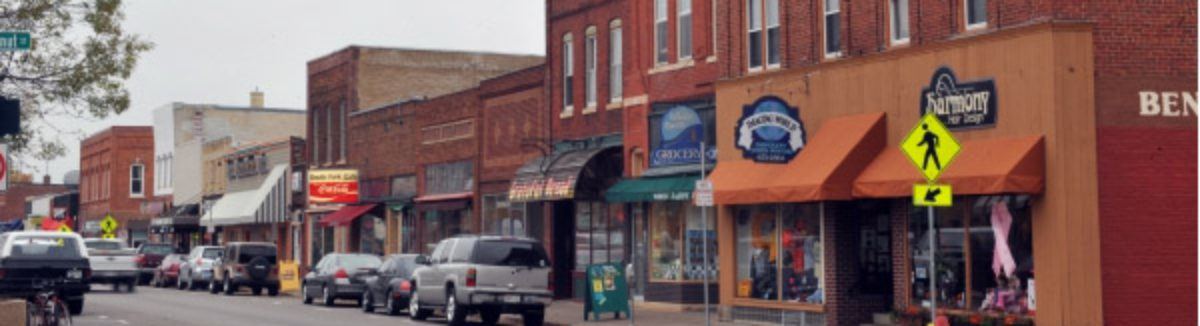
After a Thanksgiving dinner that couldn’t be beat at Ben and Amber’s house on Thursday, we decided to venture out for another River Falls tradition on Friday. River Dazzle is a one-day festival that celebrates the start of winter or perhaps the beginning of the holiday season. I’m not exactly sure what its stated purpose was, but this town sure knows how to celebrate things.

There were special events all over town, from a free matinee film at the Falls Theater on Main Street to free ice skating at the hockey arena. Kids could make crafts, mail letters to Santa, have their faces painted, ride on a horse-drawn wagon, or eat cookies and drink hot chocolate. In the evening, a Christmas parade brought Santa to town and the festive lights along Main Street were lit. This year, the lighting had a special aspect to it, because, as of January 1st, all of the municipal buildings and streetlights in town will be powered by 100% renewable energy, rather than fossil fuels of any sort. It’s nice to know that my adopted home, despite its diminutive size, has that sort of global awareness.

As the grand-kids were with their other grandparents that day, we approached the afternoon with a more adult-friendly attitude. The weather cooperated. After 6 inches of snow on Tuesday, and before another 6-8 inches over the weekend, Friday afternoon was relatively warm, albeit slushy and overcast. We decided to participate in the “Chili Crawl.” The Chili Crawl, another free event, was a contest to determine the best chili in River Falls. About 20 businesses participated, including 10 of the 11 bars in a two block portion of Main Street. From 1:00 to 5:00, each of the participating businesses offered a tiny cup of chili to anyone who wanted to taste it. You could vote on your favorite, but tasters were also eligible for cash prizes in a drawing if they obtained stamps on their card from at least ten businesses. Kathleen decided that her recent luck in the Meat Raffle would spill over into this drawing, so she was determined to taste at least ten chili samples, earn the stamps, and win cash at the drawing. She was on a mission. As for me, my ambition went only as far as sampling a beer from each of the bars we stopped at.

When we reached downtown, there was a definite party atmosphere in the air. Christmas music filled the street. The sidewalks on both sides of Main Street were packed. Groups of people hustled from business to business carrying their day-glow green cards covered with stamps from the various places they had already visited. Groups of college students, friends from town, and entire, three-generational families strolled together from place to place. Many teams had planned their route ahead of time, hoping that efficiency would aid them in their quest. Most people dressed for the occasion. I saw deliciously ugly Christmas sweaters, Santa hats, and clothing that contained battery packs to keep the Christmas lights they wore twinkling all day long.

Our first stop was the Lazy River Bar and Grill, which is situated along the Kinnickinnic River that runs through town and gives it its name. We had a beer, Kathleen tasted her first chili, and we talked with a guy who explained how the whole thing worked. He wore a Santa hat with a plastic spoon tucked under the edge. No sense in using multiple spoons, I guess. The first chili was very good, and we quickly learned that, in Wisconsin, no chili is complete without cheese scattered on the top. We moved around the corner to a realty office, but a sign said, “No chili this year, Rick.” I love the fact that he signs with his first name, and everyone knows who he is. Next door, Broz Bar and Grill was packed to the gills with no way to really get inside, so we exercised options and moved down the street to the Maverick Corner Saloon. It was crowded, but we were able to squeeze into seats at the bar. I had a Spotted Cow, which seems to be the signature beer of a Wisconsin brewery called New Glarus. Good stuff. People came and went as we sipped our beer, and the crowd in the room turned over several times in about 20 minutes.

As we sat at the bar, taking it all in, a dour-looking man sat down next to me and ordered two Busch Lights. I nodded hello, but he seemed disinclined to engage in conversation, so I left him alone. When the girl behind the bar returned with his two beers, he ordered two more. I saw my opening, so, in my wise-ass way, I gestured toward his four beers and asked, “Are you expecting friends, or are you planning on a big afternoon?” Without cracking a grin or even looking directly at me, he deadpanned, “Both.” End of conversation.

We heard a commotion at the door, and a crowd of wildly dressed men came in, singing and having a great time. These guys had apparently taken literally the directive to don ye now their gay apparel, as they were decked out from head to toe in Christmas regalia. Christmas-tree hats blinked on and off, faces were painted, and elf slippers adorned each foot. They all carried the special River Dazzle cup that allowed them to carry liquor outside the bar, so they had clearly not been deprived of their concoction of choice while walking eleven feet to the next bar. One guy wore an outfit that was, in French artistic terms, a trompe l’oeil, or trick of the eye. (I learned this term while listening in on Robert Womack’s art history class at Harpeth Hall) It’s hard to describe, but it appeared as if he were being carried around on the back of an aged Santa Claus. Very clever costume. Eventually they rolled on out and we followed.

We tried several other places, including our favorite, the Nutty Squirrel, but they proved to be too crowded for our taste. About that time, I caught a glimpse of a frightening sight. Moving toward us with relentless speed, cutting a wake through the throngs of people like a World War II destroyer, with a maniacal gleam of holiday spirit in their eyes and a song on their lips, came my worst nightmare: Christmas carolers. This group all wore Victorian outfits that looked like something out of a Charles Dickens story. I’m not sure why they terrified me so much. I have the same reaction to mariachi singers and those annoying violin players who show up at your table in a romantic restaurant. (Okay; that never actually happened to me, but I’ve seen it in movies, and I live in mortal fear that it might occur someday). It all comes down to my uncertainty about how to behave properly. I mean, do I applaud? Do I sing along? Am I supposed to tip them? If so how much? Or, do I simply stand there with a stupid grin on my face and silently pray for them to leave? I know not what course others may take, but as for me, I did what I always do in socially awkward situations: I looked for the nearest available exit. I grabbed Kathleen’s arm and dragged her into the first doorway I saw.

It happened to be a Mexican Restaurant that was not participating in the Chili Crawl, but offered margaritas for $1. To recover from our narrow escape from a traumatic encounter, I had a fish-bowl sized one for three dollars while Kathleen had a smaller one and announced that she had had enough chili and liquor for the day. So, rather than the ten places she had vowed to hit, we had made it to two. I was reminded of the scene near the end of the Godfather where an aged Don Corleone says, “I don’t drink as much wine as I used to.”

We didn’t make it to the lighting of Main Street, and we were home before it got dark (as we usually are these days), but we discovered another fun tradition here in River Falls.

River Dazzle rules.

Confidence Game

I went out and bought gas yesterday. That may not sound like a big deal to you, but the last time I did that was on September 16, the day we arrived in River Falls. I had filled the tank in mid-state Wisconsin on our way up here, and I still had nearly half a tank at that point. Admittedly, I rarely drive; I can walk to town, and anytime we go to Minneapolis or otherwise hit the highway, we take Kathleen’s 2018 Camry hybrid rather than my 15-year-old Ford. After a while, it had become a game as I tried to see how long I could go without buying gas. I checked the gauge each time I got in the car, and as long as I had confidence that I could make it home without running out, off I went. It was kind of like the classic Seinfeld episode in which Kramer is taking a test drive in a new car that is on dead “E,” but he keeps passing exit after exit, confident he could make it to the next one. Today, though, we are supposed to get six inches of snow and my confidence ran out—I don’t want to risk getting caught somewhere during a blizzard because of my stupid personal contest.

But that’s not what I wanted to talk about.

This weekend, we attended the River Falls HS fall musical. I did not expect much, because they were putting on my favorite musical, Les Mis. I have seen it in London and in Nashville, and I have always loved the powerful music and the idea of a modern-day opera in which the entire story is told through song. I know little about foreign languages and how translations work, but I have always been amazed that a musical written in French could be translated to English and still rhyme during all of its clever and emotional lyrics. If you are not familiar with the play, it is an incredibly complex show to perform, involving elaborate staging, costumes, and orchestration as well as numerous strong voices (there are six lead performers). For instance, the role of Jean Valjean requires a male lead who can stretch his voice over three octaves—a tall order for a high-school amateur. I’m sure the early rehearsals were painful for the directors and teachers. I know enough about these things to understand that it takes a long time for the performers to grow confident enough to feel comfortable in their roles. To my astonishment, however, this group pulled it off, and the performance was amazing. Everything worked well, and the girl who played Eponine was especially good. I had seen many high school plays during my years at Harpeth Hall, and even performed in one, but this was the best I had ever seen. I wondered how they could do this show in such a small town, but it turns out they had been rehearsing for four months before putting on the sold-out shows. At Harpeth Hall, they started practicing at the same time (early August) for their musicals, but the show is usually scheduled for Labor Day weekend, so they have only four weeks of practice before the show. As we walked out with our grandkids, Kathleen said, “We have to make sure we see every play they put on.”

But that’s not what I wanted to talk about.

The other day, Kathleen and I watched an episode of The Unicorn, a new network TV show. The show is not great. It’s just a typical sit-com, but we watch it on occasion because we love the lead actor, Walton Goggins, who played Boyd in one of our favorite long-form series, Justified. This episode concerned his 14-year-old daughter who wins the lead role in the school musical. In the first rehearsals, she is terrible, and her voice is a scared little whisper that can barely be heard. That’s when they realize she only got the role because the teacher felt sorry for her after her mother just died. She wants to quit, but her father makes her go through with it, despite doubts that he might be doing the wrong thing and setting her up for public humiliation. Over the course of the practices, however, the girl slowly gains confidence, and she is spectacular on the night of the show. She is a changed person from that point on, as her new-found confidence permeates the rest of her life.

But that’s not what I wanted to talk about.

Our grand-daughter, Abigail, is nine years old. Her parents have encouraged her to try lots of different things. Her mom was a very good volleyball player and urged Abigail to try it this fall. She had previously played soccer, but hated every minute of the sport. She seemed to have a similar attitude when she started volleyball. Abigail is a quiet girl who visibly withdraws when faced with social situations or anything that would draw attention toward her. We attended her first game, and it looked like more of the same. She played with her characteristic timidity and couldn’t serve the ball over the net. Of course, neither could anyone else. On the rare occasion when a serve cleared the net, all of the inexperienced girls moved away from the ball as if it were a live hand-grenade about to explode. Every time she made a mistake, Abby would look nervously toward the bench, waiting to be pulled from the line-up. The team was terrible and lost game after game. Luckily, though, Ben and Amber have a basketball court in the lower-level of their home, and they worked with Abigail, as did Kim, her maternal grand-mother and former volleyball player. Slowly, Abigail began to improve. Then, near the end of the season, a remarkable thing happened. She came up to serve and nailed it. Then she scored another ace. And another. Gaining confidence with each winning stroke of her arm, she scored five straight points. At that point the league rules required her to rotate out of the serving position. The older girls on the team rushed over to give her high-fives and congratulate her. She looked over at us, and her smile lit up the gym. She simply glowed. After that, she was a changed player, eager to get her chance to serve again, and much more active in returning the ball or setting up her teammates. A few days later, we heard a knock at our door at night and were surprised to see Abigail standing there, all alone. She was bundled up with a biker’s light on her head and had walked a half-mile to our house in the dark and the cold to deliver some mail of ours that had been forwarded to their house. I could not have imagined her being brave enough to do that just a few weeks earlier. All I could guess was that the self-confidence she discovered on the volleyball court had spread over into other aspects of her life. Such is the transformative power of confidence.

And that’s what I wanted to talk about.

As we brace ourselves for the first serious snow of the year and come to grips with the idea that we may not see the ground again until April, I am reminded of why we moved up here in the first place. The look on Abigail’s face when she started nailing those serves was worth all of the aggravation we have experienced during the move. That smile will keep us warm during the long winter to come.

Unfrozen Cave Man Ambassador

In these divisive times, I have purposely avoided discussing politics in this blog. I missed most of the televised Watergate hearings in the 1970s and the Clinton hearings in the 1990s, because I was attending classes or working during the day. Now that I am retired, however, I have been able to see all of the current impeachment hearings, and it has been riveting. Yesterday, US Ambassador to the EU, Gordon Sondland, provided moments of high comedy along with his bombshell revelations.

In the early 1990s, Saturday Night Live’s Phil Hartman had a recurring character that appeared in several sketches. He was called the Unfrozen Cave Man Lawyer and explained that he fell into some ice thousands of years ago during an ice age, was unfrozen by scientists and sent to law school. As a personal injury lawyer, he always started his closing arguments with a statement that began, “I’m just a caveman. I know nothing of your modern world, but I do know . . . etc. etc.” It was a great character, and I think of him fondly every time I hear someone pleading ignorance of something everyone in the world understands.

If you have not been following any of this, yesterday, Sondland admitted that he helped implement President Trump’s illegal plan to use the Ukrainian government to investigate his political opponents in exchange for giving them military aid that had already been allocated by both parties in Congress. This is clearly an impeachable offense, and Ambassador Sondland implicated the President, the Vice President, and his immediate supervisor, Secretary of State, Mike Pompeo, saying that he “was only following orders” from his bosses. This defense was reminiscent of the WWII war crime trials in which Nazi leaders argued that they were innocent because they were told to implement the Holocaust by military superiors. During his hours of testimony, however, Sondland carefully chose his words to avoid making himself appear guilty of crimes that might land him in prison. This is where the “Unfrozen Cave Man” reference came in. First, it should be noted that Sondland has never been accused of being the smartest person in the room. He obtained his crucially important position in our government because he donated a million dollars to Trump’s inauguration party. He is completely unqualified to be ambassador to Antarctica, let alone the European Union. When he is compared to the life-time diplomats who testified before him, this fact becomes graphically obvious. Again and again, he reminded the committee, “I am not a note-taker. I never take any notes of my meetings, and the White House and State Department have refused to give me access to any records of those meetings. If someone else testified that I said that, it must be true.” After the fifth or sixth time he said, “I don’t have any notes of that phone call; as I said, I’m not a note-taker,” I started getting a mental image of Sondland as the Cave-Man Lawyer leaning over the jury box and intoning, “I’m just a cave man. I know nothing of your modern pencils and notepads.”

The late, great Phil Hartman:

The Midas Touch of College Football

It has been an interesting college football season. Last week, four of the remaining undefeated teams met in two dramatic head-to-head games. On Saturday night, LSU hung on for a close victory over perennial champs Alabama. Earlier in the day, Minnesota defeated Penn State. “LSU, Alabama, Penn State,” you might say, “big deal; they’re always good.” But Minnesota? They haven’t been any good since the Eisenhower administration! How can this be that they are now 9-0 and in the discussions involving the national championship race?

Well, anyone following the careers of Jack and Kathleen Henderson would have seen this coming. Allow me to explain.

When I first moved to Gainesville for grad school in 1988, Florida had a mediocre football program, with more losing seasons than winning ones. Then, in 1990, Steve Spurrier was hired as football coach. In 1991, Kathleen and I were married and the confluence of events began to run together. That year, the Florida Gators won their first SEC title. A few years later, they won their first of three national titles. Despite this success, we were not big football fans while we lived in Gainesville. We loved the basketball team and had season tickets to the games. The football fans, though, were too loud and obnoxious for our taste. We never attended a football game while living in Florida. Then, in 1997, we moved to Tennessee and learned what truly obnoxious fans were like.

We arrived in Nashville during the Peyton Manning Era. We didn’t really have an opinion about the Vols or Peyton before moving to Nashville, and I’ve come to admire and appreciate Manning since then. But at that moment in 1997, every day featured more hagiographies in the papers and on TV about the quarterback who had apparently arrived in Knoxville by walking across the Tennessee River. We grew to hate him and UT just because of our contrary natures and the insufferable fans we encountered. We became fervent Florida football fans during that fall and cheered Manning’s fourth consecutive defeat at the hands of the Gators. Despite our opposition to the favorite sons of our new home, however, they won their first national championship since 1951 the following year. If you are keeping score at home, that means we lived in two places, and both of them claimed national championships for the local college team.

That brings us to this year. The University of Minnesota is about 30 miles from where we live today. The football team has a storied history that included three AP national titles before World War II and another in 1960. Since then however, the Gophers have experienced decade after decade of disappointment. The last few years brought more losses and a new coach, C.J. Fleck, to campus. We arrived in the region in mid-September of this year. The Gophers have not lost a football game since then. I’m just saying. After beating the Nittany Lions last weekend, Minnesota is 9-0 for the first time since 1904, 115 years ago. By this point, it must be viewed as something more than mere coincidence that everywhere Kathleen and I have lived as husband and wife, the college football team in the area became national contenders. Call it a Midas Touch in terms of football teams.

In short, don’t count the Gophers out for the NCAA football championship for this season.

Slow Progress & New Friends

I woke up the other morning to a beautiful, light dusting of snow on the ground.  I’m guessing that I won’t think it’s all that wonderful in a few months. Last March, during spring break, we visited up here for a few days, and there were still six-feet-deep snow drifts surrounding Ben’s driveway. I went for a run yesterday morning with the wind-chill temperature about 20. The first thing I did when I got home was get on Amazon and order some better running gloves, socks, and a ski mask. The other adjustment we will have to make is the shorter days. We are far enough north that there is less daylight than we are used to having. In the winter, it stays dark until after 8:00 and gets dark earlier at night. Then again, we don’t plan on being here all winter. There are Caribbean cruises, friends in warm climates, and craps tables in Vegas all beckoning to us during the drab, grey days of January and February.

We are still settling into our new home in incremental stages. I have now painted the entire place except the kitchen and three bathrooms, which will require more thorough updating before I paint. Painting over an interior stairway was especially challenging, as it includes a drop of nearly 30 feet from the peak of the upstairs vaulted ceiling to the bottom of the stairway in the basement. Luckily, the movers cooperated by destroying a large desk of mine during the move. I was able to take pieces of the shattered desk and cobble together a scaffold over the stairs. Then I balanced a ladder on top of that and could reach most of the ceiling edges with a long stick. I completed that part of the task while Kathleen was out of the house so as not to induce a panic attack. We have also ordered new furniture and carpeting, which should arrive in the next week or two. We are waiting to put most of our books and other things on shelves and into cabinets that will have to be moved by the folks laying the carpet. Thus we still can’t find some stuff that might be hidden at the bottom of boxes in our storage room. One of my favorite folksingers is Loudon Wainwright. Back in the ‘80s, he captured the frustrations of moving from one home to another in a song called “Cardboard Boxes.” Here is a sample of the lyrics and a link to a YouTube video of the complete song.

We got the books and the records and the tapes and the pictures
And the pots and the pans and all the breakable glass
The living room couch and the dining room table
The washer and the dryer; what a pain in the ass

                                    –Loudon Wainwright, 1985

Aside from that, we are slowly adjusting to our new town, meeting people, and finding our way around River Falls and the Twin Cities and its suburbs. Thank goodness for GPS, or we’d still be stuck on the various interstates weaving in and around Minneapolis and St. Paul. About once a week, I’ll go to a local restaurant in the morning to read and enjoy breakfast. “The Kinni Café” is my favorite for this, as they offer a discounted price for seniors along with friendly, personable service.  The other day, I overheard a conversation there that captures the laid-back attitude we’ve seen among the people in this small town.

1st man: “Have you seen George lately?”

2nd man: “Yeah, but, ya know, he’s had some health issues.”

1st: “No kiddin’; what’s goin’ on?”

2nd: “Well, his heart stopped.”

1st: “Jeez, that’s too bad.”

2nd: “Yeah. They had to, ya know, get it goin’ again.”

1st: “Ah, well that’s good.”

Here they were, talking about a friend having a heart attack, and the tone sounded as if they were discussing a dodgy lawnmower engine that wouldn’t start on the first pull. I guess they don’t get excited easily up here.

In terms of friendships, we are slowly meeting new people. We went to another meet raffle and, once again, Kathleen won two massive T-Bones worth about $20. The bartenders, Greg and Sandy, now know her by name, as do Lisa and Kayli, two students who moonlight as waitresses. Last night, we stopped in for dinner and had a great conversation with a fun couple we had met on an earlier visit. We are older than the parents of Jake and Nina, but we enjoy talking to them whenever we cross paths. We have explored several other bars in town, but the Nutty Squirrel has become the one we stop at most frequently. The other night, grand-daughter Abigail (age 9) walked the half-mile to our house by herself to deliver some mail that had gone to their house. She called first, afraid that we might be out at “that Nutty Squirrel place.” Is it bad when your grandkids know what your favorite bar is?

Our duplex/condo is part of an elongated cul-du-sac at the end of a long street adjoining a golf course. I think there are 28 units in 14 pairs of buildings. Most of the people who live here are retired, and they have all proved to be helpful without being intrusive. They also hold periodic happy-hour gatherings on Wednesday afternoons for about an hour. It seems that 6 to 12 people attend each of these, although, the particular people might vary. The first one we attended was outdoors on the grassy common area, but lately we have been driven indoors by the cold temperatures. The people are all pleasant and bright, which makes for lively and enjoyable conversation. In particular, Jane and Larry taught English at UWRF before retiring. I had a great discussion with Larry last week about the history of mystery and detective stories, ranging from Edgar Allen Poe, to Sherlock Holmes, to Ross McDonald, to contemporary writers. While painting walls, I have been listening to a Great Courses lecture series on that very subject, so the timing was fortuitous for me.

In short, we have been impressed with the friendliness and intelligence of everyone we have met. DMV clerks, waitpersons, delivery men and women, cable installers, and everyone else with whom we have been involved have been helpful, competent, personable, and bright. Two factors play into this, I think. First, of course, is the public education system. We pay considerably higher property taxes up here than we did in Tennessee, but we are happy to pay it if it results in better education than the abysmal public schools of Tennessee. Another factor that affects the quality of the work force in Wisconsin is that they seem to pay higher wages. Every business we go into has a “Now Hiring” sign, and many of them mention the hourly wage, which is better than comparable jobs in Nashville. I suppose this all means they are able to attract smarter workers with a strong work ethic. This is all just impressionable evidence and a small sample size, but, so far, we have had pleasant interactions with almost everyone we have met in River Falls.

A Halloween Zombie

I grew up reading a daily newspaper. Most people did in the 1960s. Chicago had four daily newspapers in those days. We had the Sun-Times delivered in the morning, and my parents often bought the Daily News, the Chicago evening paper, as well. On top of that, we received the South-town Economist, containing news from our local neighborhood, once a week. Admittedly, my reading was confined primarily to the sports pages in those days, but I did occasionally drift into the front section of the paper as well.

Both of my parents read the paper each day, and my dad often saved headlines or entire papers covering events that he thought were historically significant. He kept a box in the attic with papers covering everything from World War II, to landmarks in the space race, to the JFK assassination. Sometime in the ‘70s, my mom went on a cleaning frenzy and tossed the entire box without telling him. He hit the roof when he found out about it. From that day until he died, whenever I was home visiting, I would subtly remind him of those headlines just to watch his head explode. I would casually say, “Hey dad, I’m teaching about WWII in class. Have you still got those old papers in the attic?” He would immediately turn red, grind his teeth violently, and go into a tirade that began with the words, “I had every goddamned headline from the war, from Pearl Harbor to V-J Day, but your mother . . .”

It was great entertainment.

Chicago was in the center of the news in 1968, when I was 14.  Local protests over the Tet Offensive in Vietnam registered on my radar in February. The city was ripped by rioting after Dr. King’s assassination in April. The Irish-Catholic neighborhood in which I grew up went into mourning when Bobby Kennedy was killed in June. In August, the “police riots,” as they were called by the Attorney General, against anti-war protestors went on for days at the Democratic Convention. Thus, I started paying more attention to the front page news in my teens, but it was college which really awakened my interest in following a daily newspaper. In 1973, my sophomore year, I vividly remember a classmate asking our history professor about Watergate. The Nixon scandal that led to his impeachment was just heating up, but I hadn’t paid it much attention to that point. The student asked, “Do you think this stuff will make it into the history textbooks someday?” The teacher looked flabbergasted and, struggling to find words, finally replied, “They will be writing . . . volumes about this in the future.” I felt guilty about not realizing the import of this event, and, from that point on, reading a newspaper became a big part of my daily routine. That routine has continued for the rest of my life.

It was the Washington Post, with reporters Woodward and Bernstein relentlessly pursuing the truth, that finally exposed the Nixon cover-up and helped bring down a corrupt president. Good newspapers have cautious editors who won’t print a story until they are certain it is accurate. Fact-checkers follow through meticulously to assure the veracity of every detail. This process stands in sharp contrast to web-based “news” sources in which any idiot with wi-fi access can voice an opinion and pass it off as “news.” (You are reading one such idiot’s thoughts at the moment.) There is no guarantee of accuracy, integrity, or even an attempt to discover the entire truth. Those stories might even be picked up and reported on cable news channels. I shudder for the future of democracy in a nation that gets its news exclusively from the internet or television.

When I first moved to Nashville in 1997, the Tennessean was a first-rate newspaper. Moreover, the Nashville Banner was an evening paper that provided healthy competition which, in turn, kept both papers on the top of their game. I didn’t realize it, but right at that moment, the nature of the daily newspaper was changing. By 2000, people began discontinuing their newspaper deliveries and getting their news on-line. Advertisers shifted away from newsprint to digital sites, circulation began to plummet, and newspapers faced economic disaster. Soon the Banner went out of business and the Tennessean, without competition, went steadily downhill. Each year, the price went up considerably, and the content went down to the point where it had become a provincial, small-town newspaper. In recent years, the editors made a conscious decision to cover only local events and issues, to the exclusion of any national news or sports. There were only rare exceptions to this rule, such as when a former student, Jamie McGee-Chenery, wrote an award-winning, multi-part series on Haiti in the aftermath of a natural disaster. But those stories were anomalies. By the time we moved from Nashville, the paper was feather-light (both literally and figuratively), expensive, and seemed to cover only country music, the Titans, Predators, and the Vanderbilt and Tennessee football teams. No baseball, basketball, or high-school sports with the exception of Saturday coverage of HS football games. Moreover, any games that finished after 5:00 p.m. were deemed “too late” to make the next day’s paper. For example, if a Saturday football game started at 2:30 in the afternoon and finished at 5:30, the story about the game would not appear until Monday morning. National and business news were non-existent.

When we moved to Wisconsin, we knew that River Falls was too small to support a daily newspaper. We also thought that the decline of Nashville’s newspaper was an endemic problem affecting all papers. We believed that our beloved daily newspaper was dead and buried in a six-foot grave reserved for outmoded forms of communication and technology. Still, we wanted a daily paper to read each morning and sampled the two papers from Minneapolis-St. Paul, only 20 miles away across the St. Croix River. We have been delighted to find that we were wrong about the demise of the daily newspaper. Both the St. Paul Pioneer Press and the Star-Tribune of Minneapolis appear to be first-rate newspapers. We chose the Star-Tribune for a trial run. The paper is expensive to have delivered, but having a newspaper is important to Kathleen and me, so we bit the bullet. From the first issue that landed on our doorstep, we could see a noticeable difference. Instead of a story about still another country music awards show or the Titans NFL game on the front page, there was a headline about the impeachment inquiry into the dealings of another corrupt president. I felt as if I had come full circle from that history class in 1973. I could almost hear that history professor saying, “They will be writing . . . volumes about this!” On a daily basis, the paper contains a full section on national and state news, one on local events, one on business, one on entertainment, and a 12-page sports section. And when I say “sports,” I mean more than just football. A World Series game had been played the night before and ended late, yet the full story about the game was included. There was coverage on basketball, hockey, football, and other sports. Several pages were devoted to the high-school soccer and tennis playoffs, as well as results from cross-country meets. Even the letters to the editor were intelligent and well-reasoned. In short, it was everything we were hoping to find in a newspaper, but had not seen for years in Nashville.

Since the Peter Zenger case in 1735, long before the US was even an independent nation, freedom of the press has been a hallmark of American democracy. That freedom was under attack during the slavery debate in the early 1800s, in World War I under President Wilson, and at other times in our history.  In recent years, Joe McCarthy, Richard Nixon, Spiro Agnew, and Donald Trump have attempted to silence or intimidate newspapers that voiced a disagreement with them. As we watched the steady decline of our newspaper in Nashville, we thought that the same thing was happening across the country, and that democracy itself was endangered. In our minds, however, the newspaper has clawed its way out of the grave like a Halloween Zombie. So add another item to the list of reasons we are happy we made the move up here.

Raincoats and Tiaras: A River Falls Homecoming

As a small town, River Falls has a number of festivals, parades, and other events that provide continuity with the past and a sense of community for the present. In mid-October each year, they hold the homecoming weekend for the University of Wisconsin at River Falls and it is a region-wide affair.  Homecoming parades used to be a staple for, not just small-towns, but for every suburb and big-city neighborhood in America.  We were happy to see that River Falls continues this tradition even as it has disappeared in many other communities.

We had the grandkids for the weekend while Ben and Amber were out of town for a wedding. Homecoming weekend provided all of the entertainment we would need. On Friday night, the college showed the recent live-action re-make of the 1992 Disney cartoon, Aladdin. They also invited anyone in town to attend for free. We thought this would be perfect for both Abigail, age 9, and Lucas, age 6. The film was good, although less engaging than the original with Robin Williams as the genie, and the kids had a ball. I doubt that Lucas got all of the jokes, but he laughed whenever the audience did and added his own distinctive, infectious giggle when something tickled him. The students who hosted the event and handed out free popcorn were friendly, helpful, and welcoming. So far, I have seen none of the Town-versus-Gown tension that exists in many college towns. It may well occur, but it appears that the students and townspeople here seem to mix and mingle in an easy manner without conflict. Many of our favorite waitresses and bartenders have been students from UWRF, and we have found them in variably to be bright, outgoing, and helpful.

On Saturday morning, the kids were enticed to cease watching Garfield cartoons for a while by the promise of candy being tossed to the crowd by marchers in the parade. They brought plastic pumpkin containers with which to carry their anticipated bounty. The morning was cool (45-50 degrees) with light rain falling, but a two-block stretch of Main Street was already filled twenty minutes before the parade. Main Street in the downtown area is a wide thoroughfare with one lane in each direction and a median in the middle with benches, trees, and bike racks. Parallel parking is available for free on each side of the street, as well as on each side of the median.  The street was blocked off for the parade. Unable to find a good spot to stand along the storefronts, we picked a location across the street on the median. As it turned out, this was a fortuitous decision, as Abigail and Lucas were the only children in the immediate area.

While waiting for the parade to begin, I noticed something else about River Falls: little kids don’t mind the cold. Adults talk about the weather all the time and speculate about the coming winter. Kids like Abigail and Lucas, however, love the snow and the cold. On Christmas vacation two years ago, the temperature was below zero, and the kids had a house full of new toys. All they wanted to do, though, was go outside and play. In the summer, Amber has to force them to go out, and she sets a timer for 30 minutes, encouraging them to do something—anything—that will get them out of the house for a while. So, as the adults shivered under umbrellas and waited for the parade, a bunch of kids were in the middle of the street dancing and playing in the puddles of water. It was heartening to see children in spontaneous play without toys or electronic devices.

Finally, we heard some commotion: the parade was beginning. A Scottish bagpipe unit came first. A relative of mine—one I don’t recall ever meeting—won a bagpipe scholarship to Maclester College in nearby St. Paul, so perhaps there were a lot of Scots who settled in the area along with all of the Scandinavians and Germans. The pipers were followed by the middle-school marching band. This band was impressively large for such a small town. After that, we saw a group of middle-aged men (or older) riding in tiny go-carts with fezzes carefully protected by specially made plastic coverings. These, I knew, were Shriners. They drove their undersized vehicles in figure eights and other interlocking formations for a few minutes before moving on. Then came . . . another Shriners group from another town nearby. Then another. And another.  They came on miniature motorcycles, small cars, and other minute modes of transportation. They came on Harleys and firetrucks. There must have been 8 or 10 groups of Shriners from Wisconsin and Minnesota. I know that the Shriners are a fraternal group that raises money for Children’s hospitals and burn units. Aside from that, the clubs seem to be an excuse for middle-aged men (or older) to re-live their childhoods by riding around on cars and bikes better suited to young kids. And, somehow, I’ll bet beer is involved. That all sounds fine to me, and the show was entertaining, but our grandkids were growing impatient and wondering when the candy would arrive.

Finally, the girls’ soccer team from UWRF came down the street. Some were crammed into a pick-up truck, but others walked alongside or behind the truck tossing candy to the kids. This was the moment for which Lucas and Abigail had been waiting. After the soccer team came the volleyball girls and the track and cross-country team and the golf team. Every squad except the football team (which was probably getting ready for the game) was represented. There were cheerleaders and dance squads as well. And each group brought candy and plenty of it. About then, we noticed that Abigail and Lucas were the only kids in our area. The college kids invariably spotted them, came over, and put a handful of candy in their plastic pumpkins. It didn’t hurt that Lucas’s luminous yellow sweatshirt shone like a beacon of light on the gloomy day. Several people mentioned the brightness of his shirt.

The sports teams were followed by some monstrous, J. I. Case tractors representing various agricultural groups. These things had to be 10 feet high with double wheels all around. Truly impressive. Finally, the homecoming court arrived, but it wasn’t what we expected. I guess we thought it would be girls all dolled up, with beautiful gowns and half-a-pound of make-up. Instead, the girls wore practical, jeans-and-sweater outfits, sometimes covered by a clear raincoat. Make-up, which would run in the rain, was also absent, and, indeed, unnecessary on girls that young. The homecoming queen was easy to pick out because of the tiara on her head. The choice of clothing pointed out another difference that we have noticed between River Falls and Nashville. These people dress pragmatically, for the weather, rather than trying to impress anyone with their ensemble. After the college court, the homecoming queens and courts from several other local high schools followed. My guess is that many of the schools are from towns too small to have a parade of their own, so they consolidate them into the one at River Falls. The common link was that they all dressed in that same, unpretentious way, with raincoats and tiaras.

As we walked back to our car after the parade, the kids struggled to carry their bulging pumpkins and noted that they had hauled in more candy than they had all night last Halloween.  Kathleen and I anticipated a sugar-high that would have them bouncing off of the walls at mid-night. As we got in the car, Abigail, who generally, at best, grudgingly tolerates her younger brother, said, “Next year, Lucas, you have to make sure you wear that sweatshirt again!”

Road Trip to Deadwood, Part 2

Batteries recharged after a good night in Rapid City, we proceeded on our journey. First stop: Mt. Rushmore. We drove into the Black Hills National Forest in the southwest corner of South Dakota and immediately saw a big difference from the rest of the state. The elevation rose around us, green forests replaced brown farmlands, and we saw beautiful scenery in all directions. The majestic heads of Washington, Jefferson, TR, and Lincoln peeked through the trees as we approached the park.

The next step was to park the car. The parking system involved pulling into a gateway, taking a ticket, and later paying at a kiosk.  Not as easy as you might think. Kathleen, who was driving, is a wonderful woman, but . . . and there’s no easy way to say this . . . she has short arms. She drove up to the gateway and reached for the ticket. As has previously happened at every parking garage or drive-through ATM that we’ve ever been to, she suddenly realized that she could not reach the ticket. She put the car in park, opened the door, and reached through the window again. Still no good. She clicked open the seat belt. In the process, she must have hit another latch next to her seat, and that’s when the fun began. The back of her seat suddenly dropped flat behind her, and she went into panic mode. The door was still open, her seatbelt was unlatched, her arm was out the window clutching the ticket, and the seat was down flat. I was reminded of Lincoln’s phrase when one of his generals was attacked while his army was crossing a river: “He’s like an ox that’s jumped halfway over a fence.” Then the warning system of the car kicked in. Annoying signals began sounding periodically, adding to the pressure she was feeling. The line was beginning to form behind us, and an official-sounding voice yelled, “Please pull forward.” So Kathleen, always a rule follower, did as she was told. She put the car into gear and tried to pull forward with the door open and the seat belt tangled around her neck. At the same time, she was trying to fix the seat while sitting in an awkward upright position. We inched forward and the warning signals became more insistent, beeping more frequently, urgently reminding her that the door was open and her seat belt was not attached. The voice of the park ranger also grew louder, “Ma’am! Please pull forward!” During this entire fiasco, I was no help, because I was laughing so hard. We finally cleared the gate, pulled to the side, and set everything back to the normal position. The beeping stopped and angry drivers accelerated past us. Crisis averted.

Once in the park, we walked in until we had a clear, unobstructed view of the monument. It truly is magnificent, and you can’t help but marvel at the vision, the artistry, and labor that went into the project. We looked at it again from a slightly different vantage point, but then . . . we were pretty much done. I mean, I’m glad we saw it. We can check it off of the list of things to do in our lives, but you can only look at four enormous heads for so long. Back in the car, we enjoyed the scenery as we wound through the National Forest. The Black Hills are much prettier than the Badlands, and the weather had turned sunny and warm. By the time we reached Deadwood, at 11:30 in the morning, it was about 75 degrees. We were too early to check in, so we decided to drive up to Mount Moriah Cemetery, about a mile from Main Street—that’s a mile straight up.

Deadwood is situated in a narrow little valley between two ridges of mountains, with Mount Moriah located at the high point above the town. Our original plan was to walk to the famous graveyard, but I am glad we opted to drive. Otherwise, I would have had to dig another hole up there and drop Kathleen in it. She does not do well on hills.  I was picturing a “Boot Hill” type of graveyard, with wooden tombstones and barely legible names, but the cemetery is neat and well-organized in concentric ovals of marble headstones. The centerpiece, figuratively and literally, is the grave of Wild Bill Hickok, Deadwood’s most famous dead person. In 1876, he was shot in the back while playing poker at the #10 Saloon in town. A large, bronze bust now adorns his gravesite. Right next to Bill’s marker, lies the grave of Martha Canary, better known as “Calamity Jane.” She was a rough-hewn woman who performed jobs normally reserved for men in the West, such as driving mule teams. She also fostered an unrequited love for Hickok and requested that she be buried next to him. Her last wish was granted. Both of their graves are festooned with coins, stones, and small bottles of whiskey left by tourists and other well-wishers.

The town itself is a charming little place that extends over a three- or four-block main street in the shadow of looming mountains. For those who watched the show, we stayed at the Mineral Palace Hotel, built on the site of Al Swearingen’s Gem Theater. The term “theater” was used loosely, as, at the time it was actually a saloon, gambling hall, and brothel.  It is now a modern hotel housed in a building that is over a century old. The desk clerk who waited on us was apparently part of the original staff, as she seemed also to date from the 1800s. When we checked in, the old woman said, “Let me see if your room is ready.”  Instead of calling housekeeping, she scurried down the hall (at least as fast as a woman who was 112 years old can “scurry”) to check for herself.

While we waited, we looked around the lobby and saw that it extended in a labyrinthine manner down the entire street. Like many of the extant businesses in Deadwood, the hotel has expanded horizontally over the years, and now occupies an entire block of one and two-story places. The walls have been knocked out between them, and you can wander from one to the other without stepping onto the street.

I said, “Kathleen, Darling, what are those machines with bright lights and noisy sounds?”

“I’m not sure, Dearest; perhaps we should investigate.”

“Well, Pumpkin, I’m not certain, but those machines and the tables covered in green felt appear to be some sort of games of chance.”

“They do, Sweetums; do you think we should try our luck?”

“Yes, Sugarlips,” I said solemnly. “I believe that Wild Bill would have wanted it that way.”

(By the way, that’s exactly how we talk to each other.)

We spent the rest of the day roaming up and down the street in glorious weather, stopping in at one casino or another. Seth Bullock’s Hotel is still there on the sight of his original hardware store, and there are two saloons that claim to be the spot where Hickok was murdered. We explored everything. Drinks were complimentary as long as you were gambling, so we drank for free the rest of the day and had a wonderful time. It wasn’t crowded, the people were friendly and pleasant, and none of the prices were exorbitant, as is unusual for tourist locations.

We had dinner in the Gem Restaurant, where all of the dishes were named for characters from the TV show. Here is a link to the breakfast menu, if you want to see it: https://www.sirved.com/restaurant/deadwood-south_dakota-usa/gem-steakhouse-and-saloon/448710/menus/2847457 I actually won $300, so it was a lucrative day as well.

The next day, we drove back, but stopped in an Iowa motel, just across the border from Minnesota. To reach our hotel, we had to pass another casino, so we stopped in. Amazingly, I won another $300. By the time we got back to Ben’s house, we were tired, but happy that we had made such a memorable trip.

Road Trip to Deadwood, Part 1

In the 1978 comedy, Animal House, starring John Belushi, the men of Delta House find themselves stymied completely by Dean Wormer and his cohorts. They are about to be expelled from school and have their fraternity shut down. When some of the guys realize that there is really nothing that they can do about it, Otter and Boon know what needs to be done. “Road trip!” they announce.

Kathleen and I found ourselves in a similar situation in late September. We closed on our Nashville home on September 12 and drove up to River Falls where Ben and Amber were generous enough to allow us to stay with them and the grandkids until we closed on our new place on September 30.  We couldn’t start cleaning and painting, or even shopping for needed items until we actually had our furniture and were moved into the new place. Feeling a bit restless, and not wanting to overstay our welcome, we knew what we had to do: “Road trip!”

We had recently finished watching the old TV series called Deadwood on HBO. The show aired from 2004-2006, but has been played in reruns ever since then, building up something of a cult following. We resisted watching the show after seeing part of one episode in a hotel room years ago. Kathleen is no prude, but the profanity in the show was especially foul and seemed almost gratuitous, so she was turned off on watching it. She thought that the language was worse than at a Henderson-family reunion—and that’s pretty bad. We have loved long-form television series such as Sopranos, The Wire, and Game of Thrones, however, and eventually a teaching colleague of mine, Adam Wilsman, talked her into giving it another try. We were hooked from the first episode. We learned that the language was indeed excessive, so the show was not for everyone. Realistic profanity was used, though, because the creators were trying to duplicate the raw, uncivilized nature of a Western boom town in the 1870s. Once we got past the language, we found that the plotlines and characters were well-developed and intriguing, and the writing was first-rate and intelligent. In the second season (there were three all together), the writers seemed to make a conscious decision to include elements of Shakespearean writing in the scripts. From that point on, the style of the Bard was evident in each episode, complete with dialogue in iambic pentameter and soliloquies spoken to the severed head of a dead man (similar to the “Alas, poor Yorik” speech in Hamlet). Therefore, when we wanted a destination for our road trip, Kathleen said, “Let’s go to the real Deadwood.”

Deadwood was a mining boom-town that sprang up overnight in the mid-1870s. Gold was discovered on land previously granted to the Lakota tribe, white miners rushed in seeking their fortunes, Native Americans tried to protect their land, and the US Army was sent in to drive them out. It was an unfortunate, familiar story in Western history, and it led to Custer’s Last Stand in 1876, and the Wounded Knee massacre in 1890, both in the same region of SW South Dakota. Deadwood became a colorful town that attracted such Western celebrities as Wild Bill Hickok, Calamity Jane, and Wyatt Earp. Hickok was famously murdered there in 1876 while playing poker and holding the notorious “Dead Man’s Hand” of aces and eights.

As we drove over, we noticed some things I had never seen before on the bland, interstate highway system. As soon as we crossed over the Minnesota line into South Dakota, the speed-limit signs reflected the wide-open spaces of the Great Plains. You could legally drive 80 miles per hours in most places. Also, there were warning lights and railroad gates at each entrance ramp because the interstate is often closed during blizzards and heavy snow. Other than that, there was not much to see until we reached the Badlands National Park.  It left plenty of time watch the unchanging landscape and ponder the many famous South Dakotans who have left their mark on history since the area became a state. Let’s see, off the top of my head, there was Billy Mills, one of my boyhood heroes and Olympic 10,000 meter champion in 1964. Tom Brokaw from television. George McGovern, the last liberal to be nominated by a major party for president (in 1972; he lost badly to Nixon). Then there was . . . um . . . well. . . I guess that’s about it. Back to the unchanging landscape.

By the time we got to the Badlands, it was cool, overcast, and drizzling a bit. We were pleased to receive a senior discount—I still can’t get used to that idea—and bought a pass that allows us to enter any national park in the US for the next year. Kathleen paid no heed to the “Beware of Rattlesnakes” signs as she bravely forged a path from the parking lot to the inside the park. She is a true woman of the outdoors. When we reached a good vantage point, we scanned the bizarre landscape in all directions. Over millions of years, wind and water erosion have scoured the terrain, leaving reddish-tan structures of rock standing in all directions. It’s unlike any other place in the country. You could certainly understand why outlaws would choose this location as a place to hide from the law; there was little to differentiate one rock or hill or valley from another. Actually, it was beige, craggy rocks as far as the eye could see. “Look over there, some beige rocks! Hey! Some more beige rocks! My God, woman! Is that a big beige rock way out there?” We returned to the car and drove another twenty miles or so through the park and saw a lot more beige rocks. Perhaps we were just tired from a long day of driving. Perhaps the colors look more spectacular when the sun is out. The truth is, we realized, that we are simply not as affected by natural landscapes, especially deserts, as others might be. We tend to prefer historical sites and places where humans have left an imprint on the world.

We spent the night in Rapid City, SD. There was not much to see there except in the downtown area. On each of the corners, they had erected statues of the presidents. The first forty-one are included so far, through George HW Bush. They were each about five feet tall, which meant they were slightly smaller than life size. Except for James Madison, which was about the right height. I guess Rapid City’s proximity to Mt. Rushmore (about 20 miles away) is why they chose this unusual tribute to the presidents.

The next day brought glorious weather, with lots of sunshine and temperatures in the mid-seventies. On to Rushmore and Deadwood!