Evolution of a Rock and Roll Classic

A few days ago, the musical pioneer known as “Little Richard” Penniman died. In the mid-1950s, before Elvis, before Chuck Berry, before Jerry Lee Lewis or Buddy Holly, Little Richard combined elements of gospel, rhythm and blues, and boogie-woogie music to create something completely new—something that a Cleveland disc jockey named Alan Freed would later call “Rock and Roll.” In addition to his own career, Little Richard helped teach people such as Paul McCartney and Mick Jagger his unique style in the early days of their development. Despite these achievements, he never enjoyed the same level of commercial success as people who borrowed his style or learned from him. The reason, boys and girls, is the subject of today’s lesson.

Appearing in public from the time he was 14 years old, he became known as an exciting and unpredictable live performer. Developing his act in roadhouses, gin joints, and Blacks-only clubs across the South, he electrified audiences with an approach to music that exuded unadulterated joy. He played the piano standing up, using his hands, his feet, and even his ass while bouncing around the stage in front of screaming audiences. The problem was that recording studios could never capture the energy or magic of his live performances. Also, music producers tried to steer him toward gospel music or types of songs that they believed would be safer, more commercial options. His early recordings died quietly without reaching a widespread audience. Then in late 1955, while sleepwalking through another lethargic studio session, the producer called for a short break for lunch. To entertain himself and the band, Little Richard jumped into a vulgar song he had been performing live for years. The band joined in with frenzied accompaniment, and a new musical genre was born.

He started the raw, exuberant song with the memorable line, “A-wop-bop-a-loo-bop-a-wop-bom-bom!” To Richard, that’s what the drum beat to start the song sounded like in his mind. The tune was called Tutti Frutti, which was a pejorative term for homosexuals, and the rest of the lyrics contained ribald references to sex acts. The producer loved it, but knew it could never be played on the radio. A female writer was called in to clean up the lyrics, and “Tutti frutti, sweet booty,” became the nonsense line “Tutti frutti, aw rooty.” The song, with the sanitized lyrics, was released, and it enjoyed some success on Black radio stations. White teenagers began to discover the song, and sales began to grow in the niche category of “Negro Music.” It reached number two on the R & B charts in the days when “Rhythm and Blues” was a euphemism for music by Black performers. This was 1956, however, and the music industry—along with everyone else in White America—was terrified of Black people getting too wealthy or powerful. Richard’s version of the song never received much airplay on mainstream stations and achieved only modest success on conventional pop music charts. Here is Little Richard’s version of the song:

Within months, other performers lined up to record what they thought could be a major hit. About that time, a different singer was making waves in another new genre of music called “rockabilly.” Moreover, he had one attribute that made him more appealing to the music industry: he was White. Elvis Presley recorded his own version of the song, changing the last words of the onomatopoeic opening line from “bom-bom” to “bam-boom.” Here it is:

His version isn’t bad, but it almost sounds a bit like Dr. Feelgood had slipped him his first amphetamines, like he’s rushing through the song without allowing the beauty of the lyrics to resonate with the audience. (Yes, that’s sarcasm.) This version did a bit better than Little Richard’s, but Elvis had some problems too. Sure, he was White, but he still sounded Black. In addition, he touched another nerve with conservative Americans: he was too damn sexy. No one wanted their teenaged daughters getting any ideas from listening to that sort of music. That’s why ministers made public displays of destroying his records, and TV directors ordered their cameramen to film him from the waist up: they did not want the lascivious gyrations of Elvis the Pelvis to be seen by impressionable teens. Again, the song received only sporadic airplay and  never reached the heights—or sales—of later Elvis songs.

What the industry wanted was a performer who was White and completely safe. They found him in the form of Patrick Charles Eugene Boone, better known as Pat Boone. A product of David Lipscomb, a Church of Christ school in Nashville, Boone was as white-skinned and white-bread as any record-company executive could desire. In terms of style, he owed more to crooners such as Bing Crosby and Perry Como than to the early rockers. His wholesome persona and lack of controversy made him the ideal purveyor of this new style of music. He had already had one hit by covering another Black performer’s song with his version of Fats Domino’s Ain’t That a Shame. By taking on Tutti Frutti, he forged a path to success that involved toning down good songs written by Black singers. His version is stripped down, lacking in energy, and extremely bland. Think of a Thanksgiving turkey that has been skinned, boiled, and served without seasoning. I love the background setting of this lip-synched television performance. Every cliché of the late 1950s is in place here. He sits at a soda bar in his trademark white-buck shoes while girls in poodle skirts materialize from nowhere and begin dancing around him for no apparent reason. Here’s the clip: https://www.youtube.com/watch?v=jBzzlUIEWHA

Boone’s version, of course, was played on every radio station in the country, and it went on to become a major hit. He parlayed that success into a film career and his own network television show.

Today, it seems that pop performers only achieve success if they first appear on one of the multitude of “talent” competitions hosted and judged by celebrities. This process guarantees that pop music will be dominated by singers who all sound exactly like the performers who are already successful. Major labels simply don’t want to take a chance on a sound that is new and innovative. The system thus limits the opportunities for truly original singers and songwriters to rise to the top and receive the backing of major music labels. As my little story about the evolution of a hit song in the 1950s illustrates, as it was in the beginning, so is it now, and so shall it be in the future.

Still, listen again to the self-proclaimed “Architect of Rock and Roll.”  The pure enjoyment of Little Richard’s performance screams off of the recording even today, 65 years later. I think we can all use a little joyful noise today.

Self-Improvement

“What lies behind us and what lies before us are tiny matters compared to what lies within us.”

            –Ralph Waldo Emerson

The picture above is from the classic 1980 horror film, The Shining. In the family portrait, patriarch Jack Nicholson, who has been isolated with his family for the winter, is showing signs that he is cracking under the pressure. By this point, many of us, too, are getting restless. The weather is warming up, and the activities we normally associate with spring and early summer are greatly curtailed, if not completely halted. As we search for ways to entertain ourselves in these difficult times, I have a suggestion: work on yourself. Anyone who is my age has probably experienced times in their adult lives where they wished they had more time for self-improvement. Well, now you have the time. Take advantage of it.

I’ve always been a bit fanatical on trying to improve myself in one regard or another. In some ways, that’s what the title of this blog, Take Five, is all about. Psychologist Carl Jung once wrote that men mature later than women, but that at some point, the various threads of their life begin to come together. The variety of things I have done in my life have all enjoyed a resurgence in recent weeks as I have sought ways to entertain myself and burn up some excess energy. Perhaps this means that I’m finally starting to mature. I have also discovered the value of YouTube videos to teach almost anything.

Even before this thing began, I was running or walking every day and doing lots of push-ups and other exercises while trying to stave off weight gain. I’ve taken that up a notch in recent weeks by adding a 5K time trial once a week. I mapped out a 3.1-mile course along a rocky ridge in a park near my house, and I run it for time once a week. There are two brutal hills leading to the top of the ridge, and I still have to walk partway up those hills, but the times are improving steadily. Even the downhill sections offer challenges, as I discovered last week when I tripped while trying to gain time on the steep finishing stretch. The trouble with falling while running downhill, as any trail-runner will attest, is that your body doesn’t stop when it hits the ground. You tend to bounce, slide, and roll down the hill before coming to a stop. Then you get up, check for injuries, wipe off the blood, and look around to make sure no one saw how stupid you were. Obviously, at my age, any physical activities come with a law of diminishing returns—my body won’t allow me to do what I once did, and I’ll only get slower as I age. So I understand that I’ll never run the 5K under 15:00 again, but the time trials give me a goal and a reason to run intervals and hill workouts each week.

Another thing I’ve always done is read and write for a while each day. In addition to working on my novels, I usually find myself reading three books at a time. I am currently reading one about the craft of writing, called, The First Five Pages. It focuses on the importance of the beginning of novels but also gives great tips on how to improve and streamline your writing. I always have a fun and relaxing novel going; right now I am reading a John Sandford novel featuring his detective character, Lucas Davenport. Davenport operates out of Minneapolis and often includes locations that are now familiar to us. Finally, I usually have a history book going at the same time. I just finished a history of Wisconsin and am now reading one called Wisconsin Frontier, by a River Falls native. I actually read that one years ago while researching my first novel, but picked it up again last week when I noticed that the dedication was to the town of River Falls. I am enjoying learning a little about my surrounding area through these books. In addition to reading, I have been trying to beef up my vocabulary by adding three new words to my repertoire each day. I make index cards and quiz myself periodically until I reach the point where I can own these words and use them in my writing. Hopefully, this work will help me abstain from solecism and pleonasms, use stronger words as succedaneums for flaccid and enervated vocabulary, and result in prose with a more refulgent quality. We’ll see.

I have also added two new diversions to my daily routine. For the first time in fifteen years or so, I have started playing guitar again. It took several weeks to get beyond the finger blisters and develop new callouses on my fingers, but the muscle memory and latent music theory is starting to return. It was almost like learning from scratch at first, with all of the frustrations of being a new musician. I’m now at the point, though, where I can learn new songs and try to develop better techniques by watching YouTube films. (And I thought they only had cute videos about cats and babies!) In particular, I am trying to improve my finger-picking, and I’ve found some great films about that skill. I am seeing some progress by practicing for about an hour a day. In addition to the things I have done in the past, I have taken up golf as well. I’ve always been terrible at golf, but I love being out on a course. As an 11-year-old caddy, I developed an appreciation for the beauty of golf courses, especially early in the morning when the rising sun is glinting off of the dew. The cost of the game and my inability to hit that damn ball consistently, however, have kept the opportunities to enjoy such scenes to a minimum. But I have tried to play once every 3 or 4 years just to keep my game sharp. I mentioned earlier that I now live right on a golf course, and I have scavenged nearly 200 golf balls from the woods during the winter months. Now, with time on my hands, I take a basket of balls to the nearby park and hit to my heart’s content. Ben, who was on his golf team in college, has showed me a few helpful things, and I have studied some YouTube videos to pick up some more tips. After running each day, I stop at the park and practice these new techniques for about an hour. Here, too, I am seeing some progress, although I have not as yet tried my skills on the actual course.

As the American writer Ernest Hemingway once said, “There is nothing noble in being superior to your fellow man; true nobility is being superior to your former self.” Self-improvement has been one of the core values of Western Civilization since the days of the Roman Empire. Rather than bemoaning the fact that we can’t be doing all of the things we would like to do, this is a great opportunity to learn something new or improve some aspect of our lives. I have encouraged Kathleen to take up gymnastics or triathlons, but she has thus far rejected most of my suggestions. She has, however, started reading Tolstoy’s 1400-page War and Peace (Seriously). As for myself, I was thinking about learning how to fish. Or perhaps some artistic pursuit, such as oil paints. Esperanto has always intrigued me . . .

Update: In a previous blog, I mused about the possibility of floating on waterways from River Falls to the Gulf of Mexico and beyond. Well, the other day I read about a worker on a Mississippi River bridge who had his hard-hat fall from his head and float away on the water. It had his name and contact information, but, of course, he never expected to see it again. Recently someone found his hat and called him about it. The amazing thing about this story is that the man found the hat on the coast of Ireland. The adventurous chapeau had apparently ridden the current down the Mississippi to the Gulf, and, from there, caught a ride on the Gulf Stream before winding up on the Emerald Isle. Pretty cool.

Laugh, and the World Laughs With You

“Laughter reduces pain, increases job performance, connects people emotionally, and improves the flow of oxygen to the heart and brain. Laughter, it’s said, is the best medicine. … And all the health benefits of laughter may simply result from the social support that laughter stimulates.”

Psychology Today, 2005

As the coronavirus crisis drags on, and the number of deaths in only 3 months approaches the total of American lives lost in the Vietnam War over 14 years (58,000 from 1961 to 1975), we may have to work hard to keep our sense of humor. I know it’s difficult, but as the quote above indicates, there are actual physical, emotional, and psychological benefits to joking and laughing. If you think about it, this entire situation is funny in an absurd sort of way. Did any of us, just two months ago, envision a world in which we would be confined to our homes, wearing face masks in public, and washing our hands until our skin was raw? I guess what I’m saying is, as difficult as it might be at times, look for reasons to laugh. If you need something funny to read, try a Christopher Moore novel. I strongly suggest Lamb, Fool, or Noir; in each of those, he takes a familiar genre and turns it on its head. Laugh-out-loud funny.

It seems like a year ago, but as St. Patrick’s day approached, I heard a joke that I liked. Since we had reservations at a casino in Biloxi for March 17th, I thought perhaps I could casually throw it into a conversation at a blackjack table while the dealer was re-shuffling the deck. Then, of course, I never got the chance. So here it is:

A man walked into a neighborhood pub in Dublin, Ireland and ordered three Guinness Stouts. The bartender, who took his Guinness seriously, carefully poured three beautiful beers. In each glass, the dark brown, almost black, Stout was topped by nearly an inch of tan-colored foam. He placed them in front of the patron. Only then did he notice that the man was alone and planned on drinking all three beers by himself. “You know,” he said, “Guinness is best when it is freshly poured. If you ordered each of these separately, I think you’d enjoy it more.”

               The man smiled and said, “Technically, friend, these are not all for me. See, a few weeks ago, my mother died and my brothers and I lost the farm we had rented since my dear, departed father passed. One brother moved to Sydney, Australia, and the other went to Chicago, in America. I moved from the countryside to Dublin and found a job. Before we parted, though, we three boys made a promise that we would go to our local pub every Wednesday and have a beer with our brothers living far away. So I plan to drink these three stouts and reminisce about my family—those dead, and those who have moved away.”

               The bartender was touched by the story, and he left the man alone as he quietly sipped his dark beers. When the stranger left the pub, the barkeep related the story to the other patrons, all of whom were equally moved. From that day on, the ritual was repeated every week. The other men in the pub respected the ceremony, and the room grew silent until the stranger finished his three beers and left.

               Several months later, the man came in and said, “I’ll have two Guinness Stouts.” A hush fell over the room as the bartender and the other patrons assumed the worst. The bartender silently poured the beer and brought them to the bar. “I’m sorry for your loss,” he said quietly.

               “What do you mean?” the man asked.

               “You only ordered two beers today, so I thought that one of your brothers must have passed.”

               “No, that’s not it,” the stranger said. “Today is Ash Wednesday, and I’ve given up beer for Lent.”

In this current type of a crisis, though, normal humor often takes a back seat to “Black Humor” or “Dark Humor.” This is a type of humor where a morbid slant on things is combined with comedy in order to give a disturbing effect or to point out the absurdity of life. Many times, the topics discussed under this genre are serious, but the approach towards it is very light and humorous. Some of my favorite films use dark humor to great comic effect. Dr. Strangelove, Harold & Maude, Heathers, Monty Python films or, more recently Pulp Fiction (or anything else by Quentin Tarantino) and Fargo (or anything else by the Coen Brothers) all used this technique. This type of humor is not for everyone. These are the sort of films that make you laugh aloud, but then you glance around to see if anyone noticed that you found those disturbing images humorous.

My family always dealt with loss or tragedy by resorting to the dark-sense-of-humor defense. On the morning my father died, my brother Mark was at the house while the Hospice people were still there, packing up their supplies. Mark asked, “So is this like a rainout, and you get to go home early?”

Kathleen and I went to Chicago for that funeral. My other brother, Dan, showed me a T-shirt that he had bought for me. It was from a local business and read “Chicago Jack” on the back. He tossed it to me from across the room and said, “I was gonna mail this to you, but luckily dad died and saved me the postage.”

I used a variation of that line later when I was sick and missed a month of teaching. Upon my return, colleagues were discussing a particularly lengthy and time-wasting faculty meeting that had occurred in my absence. I said, “That sounds brutal; thank God I had cancer and got to miss it.”

The point is that humor can get you through anything. If your kids are making you lose your temper during your first foray into home-schooling, get a T-shirt that says, “Good Moms Use Bad Words” (I saw that one recently). If watching the news and the gloomy predictions and statistics from doctors is getting you down, turn to the President’s daily press conference for a laugh. That’s right: even the Clown-in-Chief can be funny at times, albeit unintentionally. You can’t help but laugh as he staggers like a drunken sailor from one position to another, claiming dictatorial power one day, and throwing everything back to the states the next.

It is especially laughable to watch him try to shift the blame for his many mistakes. While President Harry Truman famously had a plaque on his Oval Office desk that read “The Buck Stops Here,” Trump refuses to take responsibility for any of his numerous blunders and flings blame around like confetti. In recent days, he has pointed fingers at the World Health Organization, governors of individual states (Democrats only, of course), and even former President Obama, who left office with a plan in place for possible ways to deal with a pandemic (that plan was scrapped by Trump in 2018). Yesterday, instead of providing any semblance of leadership, he touted miracle cures, such as hydroxychloroquine, sunshine, or—wait for it—injecting disinfectant. This puts our country in the bizarre position of having the FDA, CDC, and other government organizations warning people that they should ignore the snake-oil salesman we call a President. Yes, Trump’s antics would indeed be comical if all of this weren’t so damned serious. It is safe to say that no president in history, with the possible exceptions of James Buchanan, Herbert Hoover, or George W. Bush, was so ineffective in dealing with a national crisis. In each case, moreover, many people died because of their ineptitude.

My opening quote today refers to the old saying, “Laughter is the best medicine.” I did some research and found that the origin of that quote is probably the Bible, specifically, a proverb from the Wisdom of Solomon.:“A merry heart doeth good like a medicine: but a broken spirit drieth the bones.”

Laughter may not be the best medicine, but it beats the hell out of drinking Lysol.

Hygiene is the 1st Thing to Go

First, a quick quiz. Without looking it up, What day of the week is it?

The calendar, or at least our instinctive sense of what day it is at any particular time, has probably been another victim of the Covid crisis. Our daily routines have been dramatically altered, we are out of our usual rhythm, and many of us have slacked off a bit. With millions of people working remotely or affected by the stay-at-home orders, my guess is that many people are taking advantage of the chance to sleep in a little later and ease into their day at a slower pace. During the days when Kathleen was retired, and I was still working, she loved illustrating the difference in our personalities by describing the start of our summer. As soon as school ended, I knew that I had only two months to get a year’s worth of work and house maintenance accomplished. So I made lists. There was a master list, weekly lists, and daily lists. Kathleen always got a chuckle out of my master list that had things like “Run 400 miles,” “10,000 push-ups,” “Write two chapters,” “Paint two bedrooms,” “Read 20 Books,” “Re-Surface the driveway,” “Stain the back deck,” etc. etc. She would roll her eyes at my ambitious plans and say, “My only goal is to be out of my pajamas by noon.” I think a lot of people have that same attitude these days.

Living in a duplex/condo now, there is not nearly as much work to do, so my lists are more modest. I still get up at 5:00 most mornings and do some writing or reading for three hours before I feel as if I’ve done enough to have “earned” breakfast. It’s still dark up here until almost 7:00, so I can’t really get motivated to go outside anyway until mid-morning. Plus, it’s still cold most days, and we had snow flurries early on Thursday. My run, walk, or some combination of the two takes place about 9:30 or 10:00, and I try to get 5 or 6 miles in. So, not until after 11:00 do I finally take a shower. After six decades of showering before the sun is up each morning, it feels like a real luxury to shower that late in the day. I suppose that some people don’t shower at all; without regular social encounters, appearance has diminished in importance.

I also shave my face and head while in the shower. That’s where my slacking off comes in. After many years of shaving on a daily basis (except those times when I grew an ill-advised beard), I now shave only every other day. I figure, I’m not going to see anyone, so who really cares? There are some problems with this. After running, pulling a sweaty, nylon shirt off over my bristly head on the second day is difficult. My head grabs that shirt like Velcro and won’t let go. Still, at least once every 48 hours my head is gleaming like a freshly shaven, silent shroud of skull. (I believe Simon and Garfunkel first said that in their alliterative way; I’m not sure if the words are exactly right, or if, indeed, they were talking about my head.)

My step-daughter, Kristin, works at NASA, so she has been working at home for nearly a month. Someone in Huntsville created a tongue-in-cheek quiz to see how everyone was adjusting to their new work situation. Each question that received an affirmative response was rewarded with one point. They included such things as, Did you brush your teeth?  Did you take a shower? Are you wearing shoes?  Are you wearing pants? Did you get up at your regular time? There were twenty such questions and an accompanying scale with which to grade yourself. Kristin was awake and working, but she scored a “one.” Apparently, she received a point for logging onto an online conference of some sort. Aside from that, she might as well have been lying in bed.

A lot of the stuff happening around the country is so weird that it’s fascinating. Our lives have definitely been altered in both good and bad ways. I do think it’s important, though, to try to maintain a routine of sorts. After all, when this finally ends, I envision a rush to public places like we haven’t seen since the end of Prohibition in 1933. If I’m hanging out at the Nutty Squirrel that day, arm around some stranger, warbling a slurred version of “Happy Days are Here Again,” I want to make sure they don’t stink.

He Was in Heaven Before He Died

Yesterday was a bad day. We in Wisconsin were forced to leave our homes amid this pandemic in order to practice that most basic right of American citizenship: voting. That is only remarkable because the Republican majority in the state house, in a blatant case of voter repression, insisted that there be no delays because they wanted to keep the turnout low and prevent people from voting who are more likely to support Democrats. Our President gave another farcical press conference marked by outrageous statements and a refusal to answer legitimate questions from the media. That conference came after he had dismissed the non-partisan head of the oversight committee whose job it was to see that the $2 Trillion allotted by Congress last week will be disbursed fairly and impartially. Trump, who has never done anything fairly and impartially in his life, will now oversee those funds personally in still another power grab designed to remove all restraints on his runaway authority. All of this occurred on a day when more Americans died from Covid19 than on any previous day. To top it all off, as I opened my newspaper at 5:00 this morning, I saw that one of those who died of the virus was singer and songwriter, John Prine.

I saw Prine perform many times. At one of those shows in Boulder, Colorado in 1978, he was explaining the idea behind a song of his called Bruised Orange. He recalled walking to church one dark morning to serve mass as an altar boy. There was a big commotion because a young kid, another altar boy or paper-delivery boy presumably, had been hit by a train and killed. A crowd gathered near the tracks and eleven terrified mothers waited to find out if the boy was their son. The Police finally revealed who the boy was, and, as Prine told it, “Everyone stared at the boy’s mother to see her reaction. But,” he added, “I’ll never forget the expressions on the faces of those other ten mothers.” That was the secret of his songs: he always saw the world from a slightly different angle.

I first became aware of John Prine in 1971 when his eponymous debut album came out. I was still in high-school and had only listened to pop music to that point. Something new was happening in music at that time, however. It was called “FM Radio,” and new stations were popping up that were not constrained by the limitations of Top Forty song lists. Prine was a Chicago guy, so many of these so-called “underground” disc jockeys saw him at area coffee houses and clubs and played his songs. From the first time I heard him, I was blown away. His songs told stories about ordinary people and their lives. And always, they came at you from a new angle that helped you understand the world and the people in it a little better. Somewhere, in the recesses of my mind, the thought registered that I, too, wanted to be a folk-singer. It would take a few more years before I acted on that thought, but when I moved to Austin, Texas to learn to play guitar in 1977, more than anything else, I wanted to write songs like John Prine.

Prine was not overtly political. Still, many of his songs hinted at political issues in subtle ways. In Sam Stone, he touched on the emotional and psychological battles being fought by returning veterans, long before anyone had used the term “Vietnam Veteran Stress Syndrome” (today called PTSD). That song still brings tears to my eyes. He addressed, in a humorous way, false patriotism in the form of people who put decals of the US flag on their cars, but hate most actual Americans (Your Flag Decal Won’t Get You Into Heaven Anymore). Six-o’clock News dealt with family secrets and unwanted children. As recently as 2005, he took a shot at our unjustified invasion of Iraq in Some Humans Ain’t Human. I can’t help thinking that he would have written another verse to that song if he saw our current president using a terrible human tragedy to advance his own political agenda.

Like Guy Clark and Steve Goodman, Prine never fit neatly into any commercially obvious categories, so record companies and radio stations didn’t know what to do with him. Rather than give up, though, he started his own record company where he was able to be himself, rather than some executive’s idea of what he should be. Performers such as Bob Dylan, Johnny Cash, and Roger Waters of Pink Floyd listed him among their favorite songwriters. Everyone from George Strait (I Just Wanna Dance With You), to Miranda Lambert (That’s the Way the World Goes ‘Round), to David Allan Coe (You Never Even Called Me by my Name) had hits covering Prine songs. In addition to numerous Americana music awards, he won two Grammys and, earlier this year, a Lifetime Achievement Award. So, while he was never a commercial success personally, he managed to find his own niche and earn the respect of writers and singers throughout the industry.

Prine could use words in an incredibly clever fashion, and he had a whimsical sense of humor. If you need a reason to smile today—and we all do—listen to Jesus: The Missing Years, Let’s Talk Dirty in Hawaiian, In Spite of Ourselves, The Other Side of Town, or Dear Abby. He was also a great performer, especially when he was young. Almost every time I saw Steve Goodman, John Prine would show up and do a couple of songs with him, and vice versa. They clearly had a ball performing together, and the enthusiasm was contagious. When I finally sang on the tiny stage at the Earl of Old Town, where both Goodman and Prine got their start, I felt as if I were in some sort of holy shrine. I got chills, and, as I often did, I forgot the lyrics to my own songs.

In 1975, for his Common Sense album, Prine wrote a song about his dad in which he said, “He was in heaven before he died.” I think the sentiment applies here as well. I once heard him talk about singing at an annual family reunion in Kentucky, where his parents were from. He said, “I always have to play the song Paradise about a thousand times; if I only play it nine-hundred times, they think I’m getting a big head.”  

Still, I’d love to hear it one more time, John.

Take a Hike

On Wednesday of this week, I filled my gas tank. That may not sound like a big deal to you, but I last put gas in my car in November, over four months ago. That was good gas, though. It must have been, because it was that high-priced, $2.54 a gallon stuff. This time, I filled up with that cheap, $1.79 gas, so I’m sure it won’t last as long. This morning I read that gas is under a dollar a gallon in some places in Minnesota. I don’t want any part of that crappy petroleum, though. It might ruin my car. While I was at the gas station, I took my car through the car wash. When you are as proud of your vehicle as I am of my 15-year-old Ford Focus, you try to keep it looking good. So I wash it every other year, whether it needs it or not.

Like many other people, I have been trying to find ways to stay busy during this period of enforced captivity. More than anything else, I have used the time to write every day. My friend Bruce recently read a draft of my first novel, Forest Primeval, and made some excellent suggestions. So I have been working on incorporating those ideas. (I think this is about the 14th or 15th draft.)

I’ve also been working on another novel, tentatively called A Million to One, that centers around golf. One sporting event that we watch religiously each year is the Masters, which usually takes place in mid-April. Kathleen and I often put down a small bet on a golfer with relatively long odds. It gives us someone to cheer for, and, with a little luck, we could win four or five hundred dollars for our $20 bet. We have never actually won these bets, mind you, but it gave me the premise for this new book. In this story, a guy bets on a journeyman golfer to win all four major tournaments in the same year. As the golfer catches fire and wins the first few majors, the man with the bet stands to win an enormous amount of money and becomes a national celebrity. The title indicates the odds he received in Vegas for his $100 bet.

As the weather has warmed up, I have also enjoyed going out for a 4-6-mile run or walk each day. The need to go outside is especially powerful up here, where people have been cooped up all winter due to the cold temperatures. When it finally warmed up, the stay-at-home orders kicked in. Because of that, I thought that the Kinnickinnic State Park would be crowded with hikers when I went there earlier this week.

The park is less than 10 miles from my home, and it covers the last mile of the Kinnickinnic River before it empties into the St. Croix River. This was my first trip to the park, and I thoroughly enjoyed it on a warm and sunny day. To my surprise, I did not encounter anyone else, except for a group of the fattest wild turkeys I’ve ever seen. I politely gave them the right-of-way. The trails are mostly grass covered, although some them still had sections of ice or snow or were muddy from the recent melt-off. I covered six miles on meandering trails, and it was a great opportunity to allow my mind to wander and ponder the possibilities presented by the little river that runs through River Falls. If I were so inclined, I could build a crude raft, Huck Finn style. I could put it in the water of the Kinnickinnic downtown, just past the dam and falls that give the town its name. Then I could let the current carry me, theoretically at least, down to the St. Croix, which feeds into the Mississippi a short distance from here. From that confluence, I could float past St. Louis, Memphis, and New Orleans, into the Gulf of Mexico. At that point, a person would become part of the great waters that make up the oceans and seas of the world. You could sail to Japan, Africa, Europe, or India. The very thought makes the imagination soar.

With no actual Masters tournament to watch this year, I have found it to be somewhat cathartic—and a whole lot of fun—to at least be able to write about a fictional golfer. Similarly, while being locked up at home most of the day, my mind is kept alive by thoughts of travelling to distant parts of the world where I have never been. An American cyclist named Jamie Paolinetti once said that “Limitations live only in our minds. But if we use our imaginations, our possibilities become limitless.”

We may all have to remember that over the next few months.

Coping with a Pandemic

A week ago, we drove home from Florida in somewhat strange circumstances. Our plans had changed dramatically since we first embarked on an extended vacation. Our planned stop at a casino in Mississippi was cancelled due to the closing of all casinos. Everywhere we stopped for food, we were told we could carry food out, but not sit down in the dining room. In Huntsville, our plans for two days of basketball excess during the NCAA Tournament with Kristin and Kevin transformed into card games at home, since there was no tournament. Our anticipation of the opening of baseball season was cut short abruptly.

Perhaps the most surreal moment came in Illinois when we were staying in a hotel. We stopped in a local Walmart near the hotel to pick up a few things, and it was like the circus had come to town. We had been pretty isolated for two weeks and had avoided all crowds, but this place was jammed. Some had masks on, while others had grubby T-shirts pulled up over their mouths (Yeah, that will help). I saw several Amish people shopping there, for TVs and I-Phones, I presume. People waited in line with carts full of toilet paper. In the parking lot as we headed out to our car, we saw a man with a surgical mask. That’s fine, except that his mask was pulled down to his chin, and he had a cigarette dangling from his lower lip. At least his chin was protected.

We have been pressed into extra duty taking care of the grandkids while Ben and Amber, both doctors, work at the clinic. We worry about them and what could happen if they are exposed to the virus repeatedly. They are being extremely cautious, however, and have not yet had to deal with any cases of Covid-19. The weather has warmed up, and the last of the snow finally melted away, so I have been taking the kids on hikes through the woods that border the golf course near us. We have collected bags full of lost golf balls and recyclable trash that we have found. We also taught them how to play Hearts and Spades, and they are getting pretty good. Lucas, the six-year-old, can’t read yet, and he can’t fan out 13 cards in his tiny hands, but he sure knows how to make an accurate bid on a Spades hand. This week was actually their spring break, so we have let them relax and play most of the time. Next week, though, our classes begin. I hope they are ready for AP-level history classes and some intense PE workouts. Their other grandparents just returned from a cruise, so Amber has had them in quarantine for two weeks. They will finally get to see the kids on Sunday.

The number of people that have lost their jobs nationally is staggering. Something like 3.3 million new jobless claims were filed last week, six times the old one-week record from 1982. You can’t imagine what a gut-punch that is for individuals and families that have done everything right, but now have to wonder what they will do in the future. I distinctly remember the 1982 event, because I was laid off from my factory job. That economic slump was what economists call the “Reagan Recession” when drastic cutbacks in government spending caused many businesses to shut down or reduce their workforces. I remember that Monday morning after the layoffs, waiting in a long line at the unemployment office with my dad and my brother, Dan. Dan and I were young and single, we lived together, and we figured we’d get by. But my dad was in his mid-fifties, with an 8th-grade education, few skills, and with several children still living at home. As we waited in the cold, I looked at his face and saw fear there for the only time in my life. I recall that look today and imagine it on 3.3 million faces.

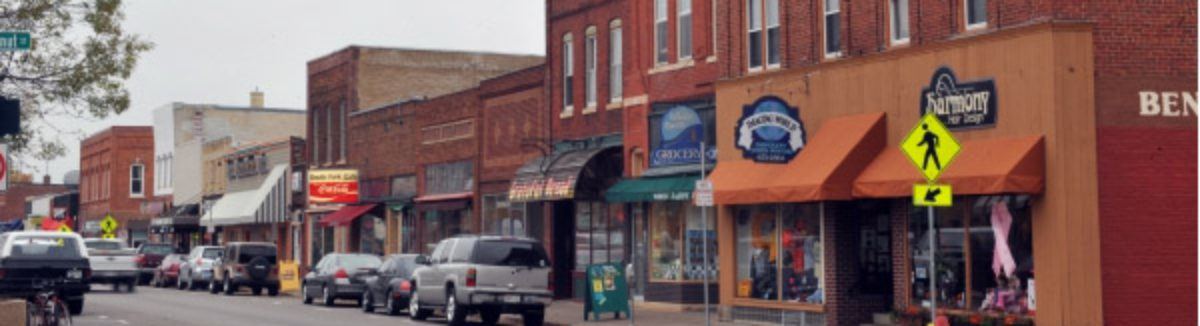
Yesterday morning, it was in the forties and sunny, so I took a long walk down the river and along Main Street. I didn’t encounter a single other walker, biker, or jogger, despite the magnificent weather. Downtown was deserted, with all restaurants forced convert to carry-out business in order to stay alive. I recently saw an interview with a guy who hosts one of those cooking shows on TV. He predicted that 75% of all independent restaurants will never re-open, explaining that most of those businesses barely survive in the best of times. If he is right, all of those jobs associated with small businesses will also disappear. Those thoughts ran through my head as I walked past a restaurant called the Copper Kettle near the university. We had eaten there once and found it to be a warm, friendly, family sort of place. As I wondered if they’d be able to weather this storm, I noticed the marquee above the door and got chills. It said, “Building for Sale” with a phone number. It has already started. If you read any of my early blogs, you know that I have been completely charmed by this wonderful little town. One of its most attractive features is that small, family-owned businesses have thrived here, while few corporate entities operate in town. I am saddened as I wonder how long that situation will continue and what that might mean for the character of this terrific place.

As a feeling of disbelief and helplessness enters each of my virus-related conversations with Kathleen, we ask ourselves what we can do. All I can suggest is do something. If you can, donate money to some local charity. We have sent a check to our food bank in town. They normally accept non-perishable food items, but because of fears about the virus, they are requesting money instead. Support a local business. We have decided that at least twice a week, we will order take-out from a local restaurant. This will be a little inconvenient, and it will cost more than cooking our own meals, but, if enough people do this, it might help other businesses from going the way of the Copper Kettle. Reach out to your elderly neighbors who might be afraid to venture into stores. They might need supplies of food, and you can make a shopping run for them. These are small things, but this is the time for us to help each other. Please use the comments space if you have further suggestions on what we can do to help.

Finally, stay safe and take care of your families. Conversations with Ben and Amber have impressed upon me the danger of this thing. Listen to the actual scientists such as Dr. Fauci and the doctors and nurses on television. Our President, who is primarily interested in posturing and boasting about his imaginary achievements, has actually made things worse by denying the truth and giving statements that are dangerously misleading at best, outright lies at worst. Practice social distancing, hand-washing, and all of those other things that seemed so silly a few weeks ago. We’ll get through this crisis, but we’ll have to lean on each other in order to do so.

Watering Holes

Since we left Wisconsin, the coronavirus situation took a bad turn in a hurry. We were lucky enough to attend a spring-training baseball game (Cardinals vs. Red Sox) in Fort Myers just before all such games were cancelled. Also our plans to watch the SEC basketball tournament here, and the NCAA tourney in Huntsville with Kristin and Kevin came to a screeching halt as those events were called off. Suddenly we were scrambling for things to do on this trip. We also wanted to avoid crowds, as everyone was warning us to “socially distance” ourselves. I had never before heard the term used as a verb, but we tend to stay to ourselves anyway. Kathleen said it best when she commented, “We practice social distancing as a lifestyle.” With our life savings having disappeared over the past week, I also thought that this might be our last vacation for a while. The first thing that occurred to me was that we could explore the various bars, pubs, and restaurants in the area, and I could call it “research.” After all, no academic worth his salt would go on a two-week vacation without including at least one research component. So, I decided that we would study the bars in and around this resort town.

The first thing we noticed was that there was no shortage of such places around here. So many bars and so little time! We arrived in Punta Gorda on Monday afternoon hungry and in need of a late lunch. Our wonderful hostess sent us a set of instructions for the house, but also included some recommendations for eating and drinking establishments. When we saw an Irish pub on her list, we headed for the Celtic Ray in the downtown area. They had a clever t-shirt that read, “Authentic Irish Pubs in Punta Gorda,” with nine boxes for the names of such pubs. One read Celtic Ray—the rest were blank. We had a couple of Irish beers and ate some fish and chips in the outdoor garden. That started a pattern for us, and we wound up eating outdoors in nearly every place at which we stopped. I have decided that eating al fresco is one of life’s great pleasures, weather permitting, and this area offers plenty of opportunities for such activities.

As you might guess, many of the places around here are built around nautical, fishing, or pirate themes. The Blue Turtle, Harpoon Harry’s, TT’s Tiki Bar, Nav-A-Gator, Hurricane Charlie’s, the Portside Tavern, Manatee Pizza, and the Low-Key Tiki, are just a few examples of food and drink establishments in the area. One place that specialized in craft beers is called the Belgian Monk and used the slogan, “Beer, Food, and Absolution.” I like that idea. Another one I enjoyed is called Shorty’s Place. It was definitely a dive and had the feel of a biker bar, complete with a gravel parking lot, despite being located in the upscale, downtown area of the city. I was attracted by the sign out front which read, “Today’s Special: Drinking Lessons.” The food and drinks were cheaper there than most places, but I think I liked it more than Kathleen did. Too many guys at the bar reminded her of my brother Gary.

Many of these bars had live music, and I was struck by the number “Tribute Bands” listed in the local papers. Some of these bands covered songs from the usual suspects, Elvis, the Beatles, Jimmy Buffett, and the Rolling Stones. Other bands surprised me, though, such as those featuring performers imitating the Eagles, Linda Ronstadt, John Denver, and even Simon and Garfunkle. After observing the age of the people we saw in the restaurants, I guess the bar owners know their clientele. It is also telling that many of these places close at nine or ten o’clock.

As we checked out these watering holes, we kind of used a sliding scale of who we knew that would enjoy that particular place. On one end of the scale was our son, Ben, and his wife, Amber. They are the youngest people on the scale, but also the most sedate. They are both doctors and rarely have more than one drink in an evening. The places they would enjoy would score well on the respectability spectrum. The Blue Turtle would definitely appeal to them—even the slightly disturbing purple mashed potatoes. Near the other end of the scale are our daughter, Kristin, and her husband, Kevin. Let’s just say that they like a good time. A bar that has a pool table or a dart board would rank high on their list. We found such a bar just a few hundred yards from our house as the crow flies. Because of the convoluted nature of the rivers, creeks, and canals around here, however, it takes about ten minutes to drive there over a serpentine route. You take a side road off of the Tamiami Trail, and turn left onto a side road off of that side road, then follow it around until the pavement ends at a seedy-looking marina. There you will find the Alligator Creek Bar and Grill. It is a friendly place with daily food specials, cheap margaritas at all times, and half-priced beer, wine, and cocktails from 5:00 on. The last time we went there, we met the owner at a table doing the books, his wife behind the bar serving drinks, and their daughter waiting on our table. There are only about eight parking spots out front, though, because most of their traffic arrives via boats on Alligator Creek. They just tie up to the pier and have some lunch or get liquored up before continuing on their journey. After eating dinner there, Kathleen and I played darts for an hour. Kristin and Kevin would approve.

At the very far end of our scale are places that my brother, Dan, and his wife, Esther, would enjoy. In his younger days, Dan not only enjoyed a cocktail, but he might also welcome a good brawl to top off the evening. Like all of us, he has mellowed (a little, anyway) as he has aged, but some of my fondest memories involved evenings with him in bars that had a little danger or adventure connected with them. The Dollar Bill Bar on Cabbage Key island practically reeks of adventure. I first came across this place in a scene in one of those fictional books I read on our drive south. The author of the other book I read, Randy Wayne White, frequently pulls his boat up to the dock and enjoys a beer at this bar. In fact, an autographed picture of him rests on the piano. It was easy to get to Cabbage Key. We simply drove south and west for 45 minutes, took a boat from Island Girl Charters to North Captiva Island, and finally, after about an hour on the water, we got dropped off on the dock in front of The Cabbage Key Inn and Restaurant (the official name). Cabbage Key is a beautiful, tropical island with no connection by road or bridge to the mainland. It consists primarily of an inn, several cottages, and the aforementioned restaurant and bar. The island was purchased for $2500 in the 1920s and the quaint inn was built as a second home by the family of author Mary Roberts Rineholt (sort of the American version of Agatha Christie). When we arrived, we first took a short walk on the nature trail. Kathleen made it past the alligator warning signs, but the pictures of native snakes did her in, so we headed to the bar.

The bar is legendary. It is a tiny place, but it spills into the surrounding rooms making the restaurant something of a labyrinth that goes in all directions. The story goes that a local fisherman came in one day after an unusually successful catch. He was flush with money at the moment, but he taped a couple of dollar bills with his name on them to the wall. He said he knew he would run through his money quickly, and he wanted to leave a buck or two so he could still get a beer during the inevitable lean times. A tradition and a new nickname for the saloon were born that day. Today, amidst the mounted fish, faded photos, and other odd paraphernalia decorating the walls, are decades’ worth of signed dollar bills left by visitors. It is estimated that there are 75,000 of them. As the tape wears out and the bills fall to the floor, they are collected and donated to a nearby children’s charity. They give about $14,000 a year to the charity in this way. Among the celebrities who have bent an elbow at this famous bar are Ernest Hemingway, Katherine Hepburn, Jimmy Buffett, Kevin Costner, Ted Koppel, and Julia Roberts.

We were among the first people in the bar at about 10:45, and we moved into the restaurant for lunch a short time later for the first sitting. I ordered a cheeseburger just so I could say I had eaten a cheeseburger in paradise. By the time we finished our burgers and key lime pie, however, every seat was filled, a line stretched out the door and down the hill, and the dock was a chaotic mess with dozens of boats and yachts jockeying for the few spaces available to tie up. Apparently, lunch is a big deal on Cabbage Key, and this sleepy little island turns into a boating Mecca for several hours a day on weekends.  It is overrun with tourists and boaters for a while, but by evening, it transforms back into an idyllic island paradise without most of the trappings of the modern world. The trip to Cabbage Key was expensive and relatively lengthy, but it was also fascinating, and I’m glad we took the trouble to go.

Well, I have to stop this prolonged research report: happy hour at Alligator Creek begins in a few minutes.

Floridays

Most of the people who retire to Florida are wrinkled and they lean on a crutch;

And mobile homes are smothering the Keys; I hate those bastards so much.

I wish a summer squall would blow them all, way up to Fantasy Land;

They’re ugly and square, they don’t belong here, they looked a lot better as beer cans.

            –Jimmy Buffett, Migration

I have always had mixed feelings about Florida. Growing up in Chicago, the state always had a magical appeal as a place where it was always warm, and it never snowed. Then I lived in Florida for eight years starting in 1989, and Kathleen joined me when we married in 1991. I was studying and teaching at the University of Florida at the time, and we thoroughly enjoyed our time there. Gainesville is different than most of the rest of the state, however, as it is not on water, and it is not a tourist destination for most people. On this recent trip, as we drove south through the state, traffic became steadily more congested, and most of the coastal areas we could see were heavily developed with expensive homes and high-rise hotels and condos. Usually, the building of new residential or commercial areas in Florida comes at the expense of the natural environment and endangers a fragile ecosystem. In many ways, this has been the story of Florida since 1912, when Henry Flagler’s railroad first stretched down the east coast of the state to Key West and opened south Florida to development by wealthy northerners who wanted winter homes in a warm climate.

We are staying in the home of a friend in a subdivision called Burnt Store Isles. The area and the twenty-mile-long road that gives it its name come from a story that is shrouded in mystery and legend. Apparently, there was a trading-post store near here in the 1840s that was damaged by a hurricane and a fire. Whether the fire was from a natural (e.g. lightning) or intentional source (e.g. angry Seminole natives) is part of the mystery, but I love those place names that result from historical events in the distant past. This home is gorgeous, with most of the living space in an open, high-ceilinged room that contains the kitchen, living room, and two dining areas. The large room faces a great screened patio with another dining area, a small, heated pool and hot-tub, and a comfortable deck. To top it off, the home sits on a canal that winds its way to Alligator Creek and, eventually, to the Gulf of Mexico. This morning, I sipped coffee on the dock while watching 12-16-inch fish go airborne pursuing insects and seeing a family of alligators circling nearby in search of breakfast.

While walking in the mornings, I have been confronted by my conflicted feelings about Florida. Most days, I walked along a bike path that parallels Highway 41, also known as the Tamiami Trail (A contraction of “Tampa-to Miami”). Regarded as an engineering marvel when it was built in the 1920s, the road traversed a 275-mile route that included “America’s Last Frontier,” the Everglades. Walking next to mangrove swamps just after dawn reminded me that, no matter where you are in the state, you are never far from nature in a raw form. Let’s just say that “pest control” people around here earn their keep. Whether it is native species such as alligators, crocodiles (there are still a few remaining in brackish areas), and bobcats, or invasive critters like wild boars, you are usually within a stone’s throw of some animal that would love to prey on your pet or destroy your backyard garden. Most disruptive of all are the Burmese Pythons that grow to over 20 feet and can kill full-grown gators. Native to SE Asia, the first of these pythons were spotted in the Everglades in 1980. Their population is growing rapidly, however, and today it is estimated that over 300,000 of them live in Florida. And don’t even get me started on the insects. Needless to say, I kept a wary eye to my right as I walked each day.

Then I returned to the subdivision in which we are staying, and some startling contradictions slapped me in the face. The homes in Burnt Store Isles are beautiful and well-maintained. As the sun rises each morning, a small army of gardeners and landscapers flood into the area in the never-ending struggle to tame nature and keep it at bay. As the day unfolds, the cacophony of new construction can be heard over the soothing sounds of the natural environment. I have discovered that this sub-division was a wilderness of mangrove swamps just 25 years ago. Developers dredged out a regular pattern of canals so that every home here sits on the water and the owners can be close to nature. This all reminded me of the irony that, fifty years ago, Walt Disney clear-cut an actual jungle near Orlando in order to build an artificial one for the Jungle Cruise ride in Fantasyland. These thoughts are intended to be observations, not judgments. I don’t have any answers—after all, what the hell do I know? Lots of questions occur to me, though, and the obvious one is, How much development is too much?

Yesterday, we purchased a local newspaper and two front-page stories jumped out at me. In both cases, once-thriving communities of rental properties, small houses, and mobile homes had been bought out by developers. Now the inhabitants, many of them Vietnam vets, retired folks, or elderly people on limited, fixed incomes, have been ordered to leave so that more new, high-end homes could be built. Like the native animals and Seminoles before them, these people were being forced to move so that someone else could make more money.

I know I sound like the classic outsider criticizing the people who actually live here all the time. After all, I am staying in a wonderful house in a wonderful subdivision, and we are grateful for every minute of it.  I also need to stress the fact that, despite my jaundiced view on some aspects of this state, there is still something intriguing and appealing about Florida, and I can’t help but think it’s an incredible place. The warm air and sunshine certainly feels good after a River Falls winter. The tropical breeze carries flowery scents that I haven’t enjoyed for a long time. The numerous bars around here have exotic drinks and live music, and they generate a festive atmosphere at all times. (More on this in the next installment) And no matter where you are in the state, you can drive to the ocean or the Gulf of Mexico in an hour or less. Hell, I’d like to live here all the time, despite Florida’s flaws.

So, I’d like to finish with another quote from that same Jimmy Buffett song. He was speaking of the Caribbean in general, but the idea certainly applies to my feelings about Florida.

If I ever live to be an old man, I’m gonna sail down to Martinique.

I’m gonna buy me a sweat-stained, Bogart suit and an African parakeet.

And then I’ll set him on my shoulder, and open up my trusty old mind.

I’m gonna teach him how to cuss, teach him how to fuss,

And pull the cork out of a bottle of wine.

On the Road

In the early 1950s, Jack Kerouac left his home in New York City and took a little trip. He traveled across the country while driving with or meeting some of the most prominent writers of that era, including William S. Burroughs, Alan Ginsberg, and Neal Cassady. When he finished his vacation and began to write, referring to stacks of notebooks he had filled during the epic journey, he found traditional typing too slow to keep up with the racing thoughts in his brain. So, he taped stacks of tracing paper together into one, continuous, 120-feet-long piece of paper, fed one end into his typewriter, and filled it with stream-of-consciousness thoughts without punctuation, paragraph breaks, or margins. It took his editor four years to turn the mess into a publishable book. The end result, however, became the classic novel of the “Beat Generation.” That 1957 book, On the Road, chronicled his frenzied travel adventures fueled by jazz music, manic energy, and mind-expanding drugs; it became a key document for the counter culture during the decade that followed.

Kathleen and I recently embarked on a more sedate version of Kerouac’s odyssey, minus, of course, the jazz, the energy, or the drugs (unless you count Kathleen’s blood-pressure medicine). We traveled down to Florida for a week’s stay in Punta Gorda, stopping along the way in Champaign, Marion, Illinois, Huntsville, Alabama, and Perry, Florida to visit with friends and relatives.  We had some great visits as we meandered south and enjoyed watching the temperatures rise, the grass turn green, and the daffodils appear in the woods along the road. Kathleen handled the driving, so I was able to start and finish two books, both set in the area of southwest Florida where we would be staying. One was written by Randy Wayne White, whose Marine Biologist-slash-private detective named Doc Ford operates out of a sleepy fishing village on Sanibel Island. The other, a novel called Electric Barracuda by Tim Dorsey, follows the continuing misadventures of Serge Storms, a native Floridian who loves arcane historical landmarks and hates those who damage them or the fragile tropical environment of his home state. He leaves a string of bodies in his wake, with all of the victims murdered in some painful and creative manner. I hope we are able to visit some of the places he mentions in this and other hilarious books featuring Serge.

Another thing we tried to do on the trip down here was to get off of the interstates as we drove. Twenty-five years after Kerouac’s novel, William Least Heat-Moon wrote another book about travels across the country. In his 1982 non-fiction, best-seller, Blue Highways, the author lost his job and his wife and set off on a soul-searching journey. His theory was that the interstate highways gave travelers the impression that all of the US was a never-ending parade of sameness, with similar chain restaurants and gas stations at every exit. Thus, he chose to drive along the back roads, marked in blue on the old Rand McNally maps, feeling that only there would he see the true America. He met with interesting characters and reached some intriguing philosophical conclusions along those roads less-traveled by. I read and was inspired by that book when it first came out, but I never had the free time to apply its main premise to my own travels. Now I do! Kathleen and I set out on our trip determined to get off of the interstates whenever possible. We have the 2020 version of the Rand-McNally Road Atlas, although it was not easy to find. Apparently, we are the last people in America to use actual maps, rather than the GPS app on their phones.

We avoided congested Nashville completely, leaving I-24 at Clarksville and winding our way down to Huntsville. We stayed off I-65 when we continued south from there and drifted through some scenic areas of hills and lakes in western Alabama. When we crossed into southern Georgia, however, the scenery ended—along with pretty much everything else. For 150 miles, from Columbus, Georgia to the Florida state line, there was a complete lack of humans or anything of interest. A couple of tiny towns were bypassed by the road we were on, leaving nothing to see but scrub pine, rusted and crumbling shacks, and scary-looking mobile home parks. There were no gas stations, restaurants, fast-food places, or any other businesses. One billboard we saw read simply “Trump” on one half, while the other half advertised a store where automatic assault weapons were available. At one point, we turned off of our road in search of food. While we slowly rolled through a depressed-looking, sleepy town called Cuthbert, no actual people were out and about. I suddenly remembered that every horror movie involving forced imprisonment and torture started with the words, “Hey! Let’s check out this little town and see if we can find something to eat.” We circled back to our main road and eventually stumbled onto a Huddle House restaurant. I’m glad we did, because we didn’t see another business of any sort until we reached Florida. In that state, we continued to drive on side roads whenever possible until we reached Punta Gorda.

So, was our Blue Highways experiment a success or a failure? On the one hand, we decided that it was a relaxing drive, with much less traffic or stress than on the interstates. Most of the roads we found were divided, four-lane roads that allowed speeds of 65 MPH except when passing through an occasional town. Therefore, we discovered that we didn’t lose any time by taking the more-direct, diversionary routes.

On the other hand—southwestern Georgia. When you can drive for several hours without seeing an actual town or a gas station, your mind immediately goes into worse-case-scenario mode. If we ran out of gas or had mechanical problems, it might take hours until a AAA tow-truck could arrive from the nearest city. That is, if you can even get cell phone reception in such out-of-the-way places. I’m sure I’ll be having recurring nightmares about having to walk up to one of those decaying homes and knocking on the door to ask for help while a toothless kid plays his banjo on the porch swing.

In the next installment, I’ll talk about our wonderful house in Punta Gorda and Florida in general.